European Bee-eater
Merops apiaster
Genus ·
Typical Bee-eaters
Family ·
Bee-eaters
Observation tips
Difficulty: EASY
Best time
🕒 Any
Activity
☀️ Diurnal
Best months
1
2
3
4
5
6
7
8
9
10
11
12
Observation habitat
GrasslandRiver banksUrbanUtility wires
Look for a kaleidoscope of colors: yellow throat, blue-green underparts, and a chestnut back. Scan wires near sandy riverbanks.
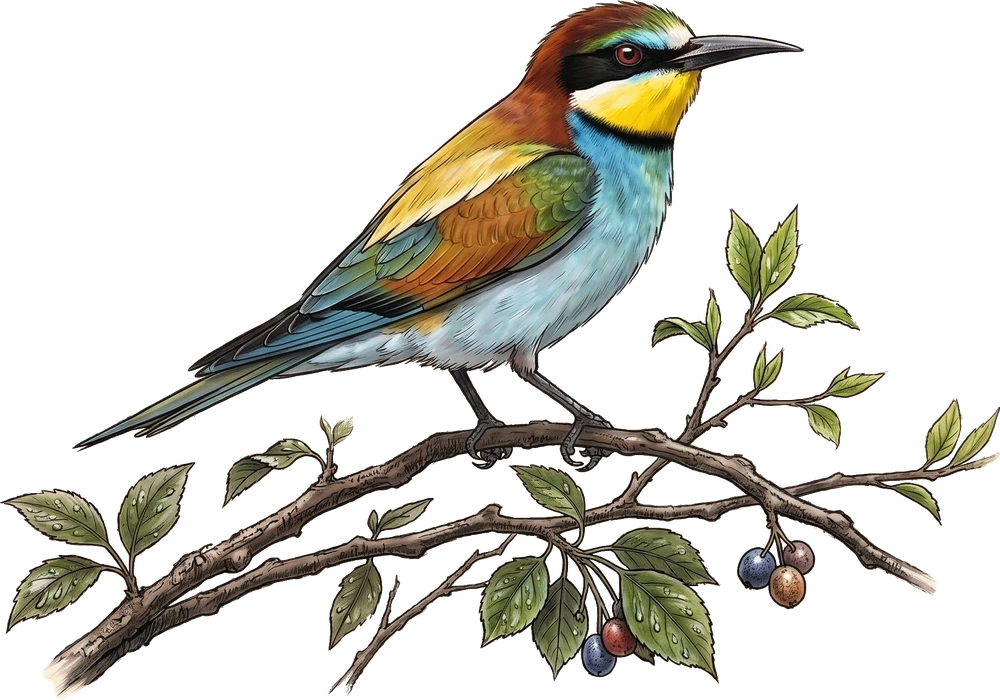
♂ Male · ♀ Female
Stats
Wingspan44–49 cm
Weight45–80 g
Length25–30 cm
Lifespan wild4–6 yrs
Size
XS
S
M
L
XL
Nesting
Nest typeBurrow
Clutch size4–7 eggs
Incubation20–24 days
Breeding months
1
2
3
4
5
6
7
8
9
10
11
12
Regional Status (Europe)
LC
Least Concern (Europe)
IUCN Red List
MigrationMigratory
Social BehaviourColonial
Diet: Insectivore
🐝Bees
🦗Insects
Habitat
🌿 Grassland⛰️ Mountains🍎 Orchard🏞️ River
✦ Fun Fact
European Bee-eaters have cooperative families, with young birds from previous years helping to raise new chicks.

See European Bee-eater in the app.
Full encyclopedia, offline diary, AI identification - always with you.
Download on Google Play
Full encyclopedia, offline diary, AI identification - always with you.