Eurasian Golden Oriole
Oriolus oriolus
Genus ·
Old World Orioles
Family ·
Old World Orioles
Observation tips
Difficulty: HARD
Best time
🕒 Any
Activity
☀️ Diurnal
Best months
1
2
3
4
5
6
7
8
9
10
11
12
Observation habitat
Canopy foliageForest edgesTree branches
Listen for the loud, fluting whistle. Use binoculars to scan the high canopy of oak or poplar trees for a flash of bright yellow.
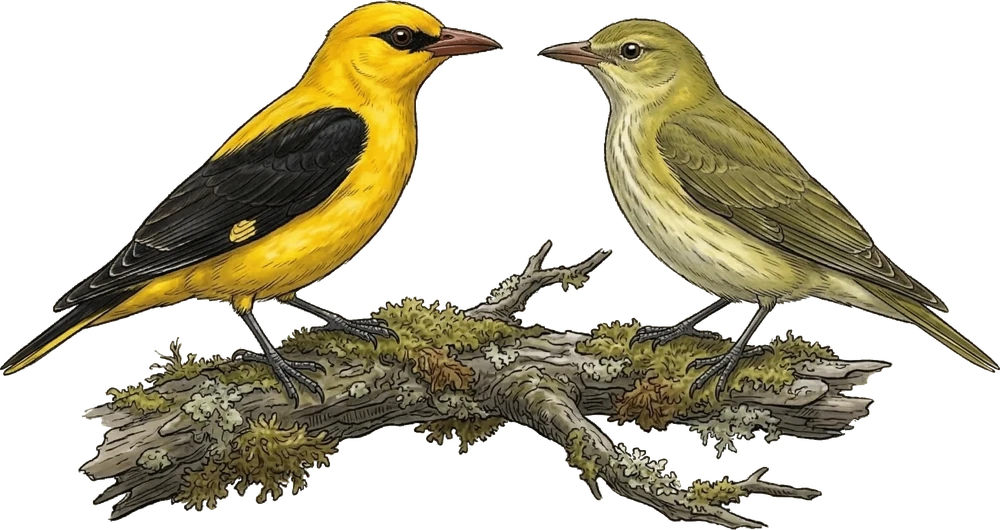
♂ Male · ♀ Female
Stats
Wingspan44–47 cm
Weight50–85 g
Length22–25 cm
Lifespan wild5–10 yrs
Size
XS
S
M
L
XL
Nesting
Nest typePendant
Clutch size3–5 eggs
Incubation14–15 days
Breeding months
1
2
3
4
5
6
7
8
9
10
11
12
Regional Status (Europe)
LC
Least Concern (Europe)
IUCN Red List
MigrationMigratory
Social BehaviourMonogamous pairs
Diet: Omnivore
🫐Berries
🍎Fruits
🦗Insects
Habitat
🌳 Forest deciduous🍎 Orchard🏙️ Urban
✦ Fun Fact
The female Golden Oriole can look surprisingly similar to a Common Cuckoo in flight, and the resemblance has led to frequent misidentifications by birdwatchers.
See Eurasian Golden Oriole in the app.
Full encyclopedia, offline diary, AI identification - always with you.
Download on Google Play
Full encyclopedia, offline diary, AI identification - always with you.