Garganey
Spatula querquedula
Genus ·
Shovelers and Allies
Family ·
Ducks, Geese, and Swans
Observation tips
Difficulty: MODERATE
Best time
🕒 Any
Activity
☀️ Diurnal
Best months
1
2
3
4
5
6
7
8
9
10
11
12
Observation habitat
Lake wetlandsMarshy grasslandWater edges
Look for the male's long white eyebrow. In flight, watch for the pale blue patches on the front of the wings.
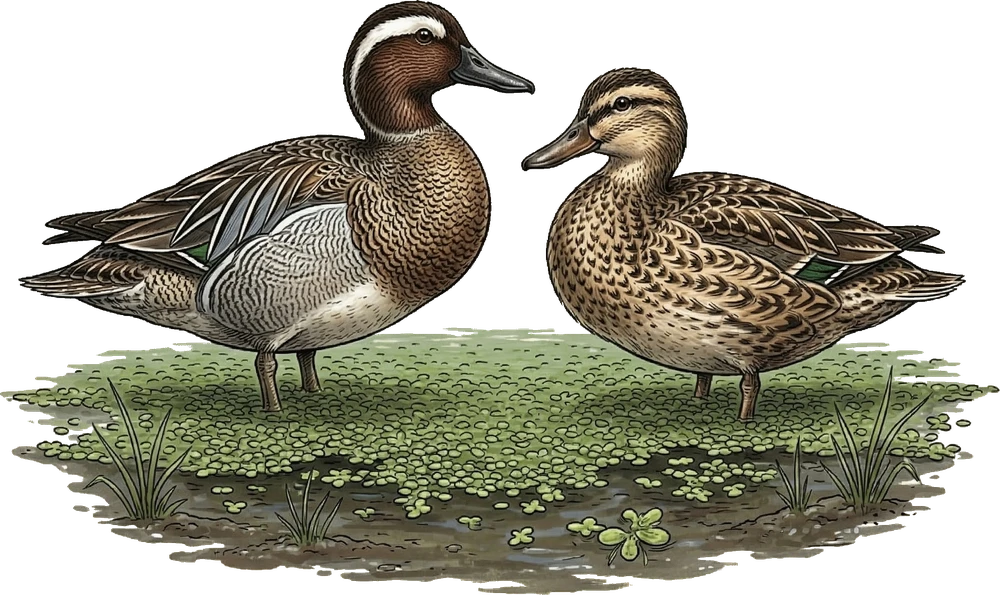
♂ Male · ♀ Female
Stats
Wingspan58–69 cm
Weight250–550 g
Length37–41 cm
Lifespan wild5–15 yrs
Size
XS
S
M
L
XL
Nesting
Nest typeScrape
Clutch size8–11 eggs
Incubation21–23 days
Breeding months
1
2
3
4
5
6
7
8
9
10
11
12
Regional Status (Europe)
LC
Least Concern (Europe)
IUCN Red List
MigrationMigratory
Social BehaviourFlocking
Diet: Omnivore
🦀Crustaceans
🦗Insects
🐚Mollusks
🍃Plants
🌻Seeds
Habitat
🛶 Lake wetlands🌾 Marsh
✦ Fun Fact
Garganeys often migrate in small, loose groups rather than large flocks, making them less conspicuous during migration.


See Garganey in the app.
Full encyclopedia, offline diary, AI identification - always with you.
Download on Google Play
Full encyclopedia, offline diary, AI identification - always with you.