Northern Shoveler
Spatula clypeata
Genus ·
Shovelers and Allies
Family ·
Ducks, Geese, and Swans
Observation tips
Difficulty: EASY
Best time
🕒 Any
Activity
☀️ Diurnal
Best months
1
2
3
4
5
6
7
8
9
10
11
12
Observation habitat
Lake wetlandsRiverWater edges
Look for the 'front-heavy' silhouette in flight. Even from a distance, the massive bill makes the head look disproportionately large.
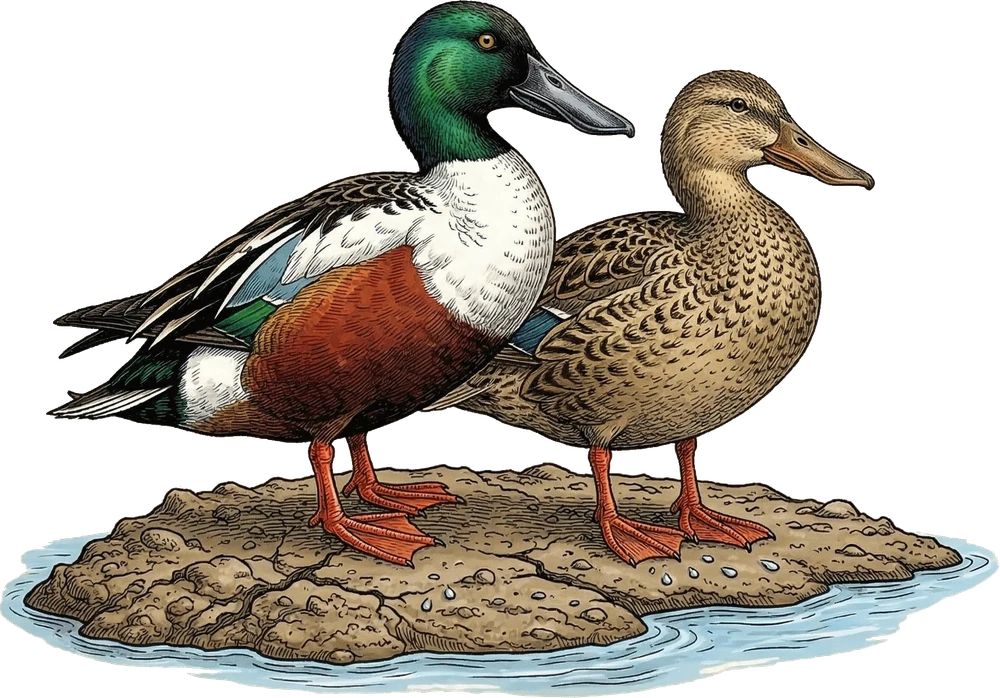
♂ Male · ♀ Female
Stats
Wingspan70–85 cm
Weight400–1100 g
Length43–56 cm
Lifespan wild10–18 yrs
Size
XS
S
M
L
XL
Nesting
Nest typeScrape
Clutch size8–12 eggs
Incubation22–25 days
Breeding months
1
2
3
4
5
6
7
8
9
10
11
12
Regional Status (Europe)
LC
Least Concern (Europe)
IUCN Red List
MigrationMigratory
Social BehaviourFlocking
Diet: Filter feeder
🦀Crustaceans
🦗Insects
🐚Mollusks
🌊Plankton
🍃Plants
Habitat
🚜 Farmland🛶 Lake wetlands🌊 Marine🌾 Marsh
✦ Fun Fact
The Shoveler's bill contains hundreds of fine lamellae. This makes it one of the most sophisticated 'sieves' in the bird world.

See Northern Shoveler in the app.
Full encyclopedia, offline diary, AI identification - always with you.
Download on Google Play
Full encyclopedia, offline diary, AI identification - always with you.