Great Tit
Parus major
Genus ·
Great Tits and Allies
Family ·
Tits, Chickadees, and Titmice
Observation tips
Difficulty: EASY
Best time
🕒 Any
Activity
☀️ Diurnal
Best months
1
2
3
4
5
6
7
8
9
10
11
12
Observation habitat
Bird feederNest boxesTree branches
Look for the black 'tie' on the yellow breast. The wider the tie, the more likely the bird is a male. Very common at feeders year-round.
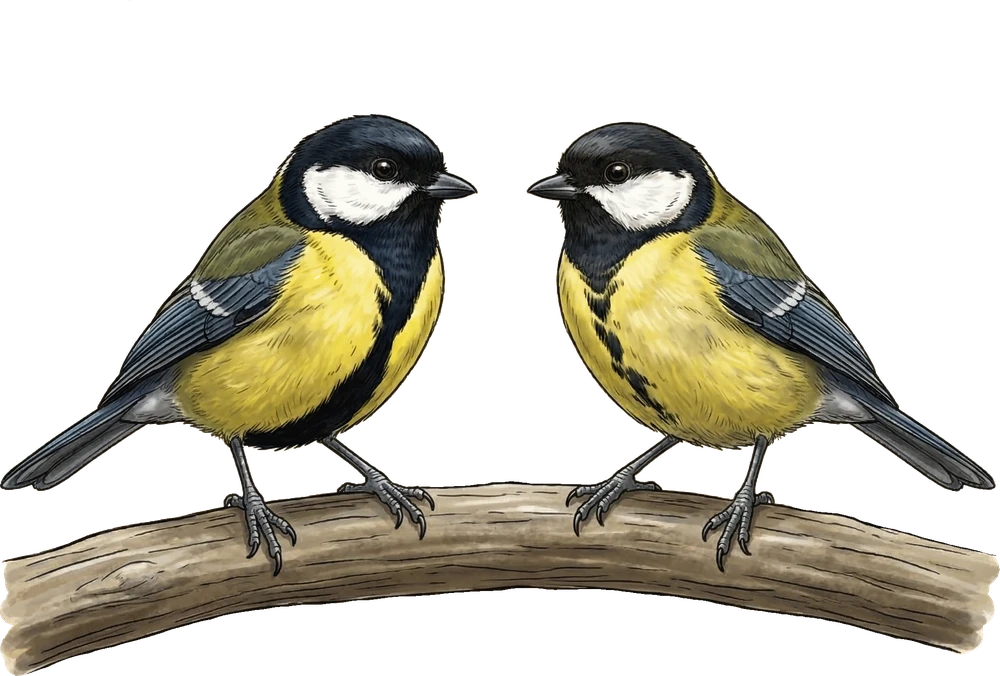
♂ Male · ♀ Female
Stats
Wingspan22–25 cm
Weight14–22 g
Length13–15 cm
Lifespan wild2–10 yrs
Size
XS
S
M
L
XL
Nesting
Nest typeCavity
Clutch size5–12 eggs
Incubation12–15 days
Breeding months
1
2
3
4
5
6
7
8
9
10
11
12
Regional Status (Europe)
LC
Least Concern (Europe)
IUCN Red List
MigrationResident
Social BehaviourFlocking
Diet: Omnivore
🫐Berries
🥩Fat
🦗Insects
🥜Nuts
🌻Seeds
Habitat
🌳 Forest deciduous🌲🌳 Forest mixed🏡 Garden🍎 Orchard🏙️ Urban
✦ Fun Fact
In the early 20th century, Great Tits in the UK famously learned to peck through the foil caps of milk bottles to steal the cream from the top.

See Great Tit in the app.
Full encyclopedia, offline diary, AI identification - always with you.
Download on Google Play
Full encyclopedia, offline diary, AI identification - always with you.