Red Kite
Milvus milvus
Genus ·
Milvus Kites
Family ·
Hawks, Eagles, and Kites
Observation tips
Difficulty: EASY
Best time
🕒 Any
Activity
☀️ Diurnal
Best months
1
2
3
4
5
6
7
8
9
10
11
12
Observation habitat
FarmlandIsolated treesMigration watchpoints
Look for the very deep fork in the tail. Look for the brilliant white 'windows' near the tips of the underwings. Its pale grey head is also a key feature.
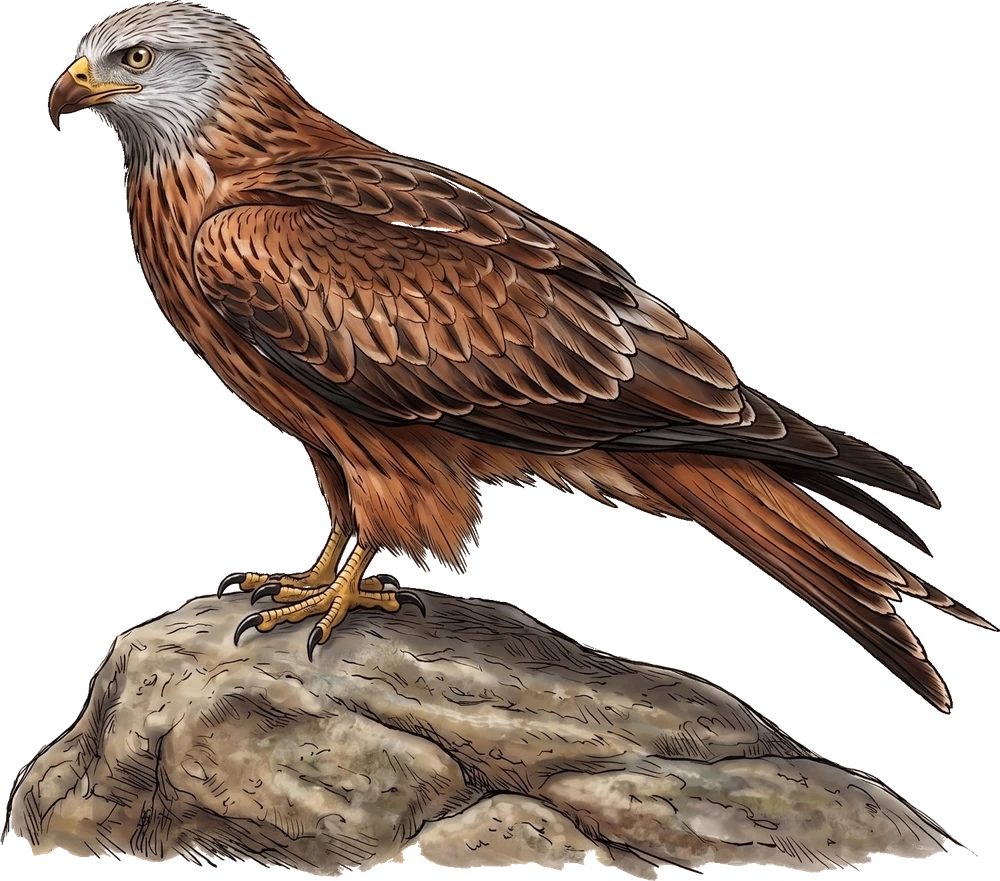
♂ Male · ♀ Female
Stats
Wingspan175–195 cm
Weight800–1300 g
Length60–70 cm
Lifespan wild10–25 yrs
Size
XS
S
M
L
XL
Nesting
Nest typePlatform
Clutch size2–3 eggs
Incubation31–32 days
Breeding months
1
2
3
4
5
6
7
8
9
10
11
12
Regional Status (Europe)
LC
Least Concern (Europe)
IUCN Red List
MigrationPartial migratory
Social BehaviourSolitary
Diet: Carnivore
🦅Birds
🦴Carrion
🦗Insects
🐭Mammals
🪱Worms
Habitat
🚜 Farmland🌳 Forest deciduous
✦ Fun Fact
In Shakespearean London, Red Kites were very common city scavengers. They were protected by law because they helped keep the streets clean.
See Red Kite in the app.
Full encyclopedia, offline diary, AI identification - always with you.
Download on Google Play
Full encyclopedia, offline diary, AI identification - always with you.