Common Buzzard
Buteo buteo
Genus ·
Buteos
Family ·
Hawks, Eagles, and Kites
Observation tips
Difficulty: EASY
Best time
🕒 Any
Activity
☀️ Diurnal
Best months
1
2
3
4
5
6
7
8
9
10
11
12
Observation habitat
FarmlandForest deciduousGrassland
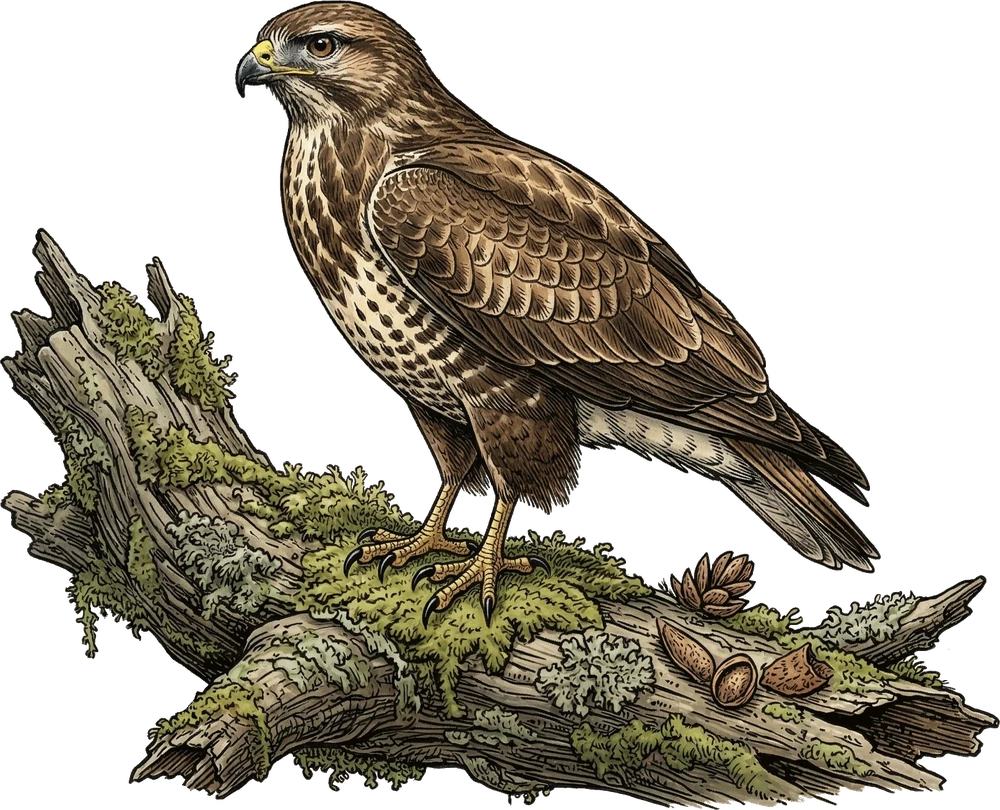
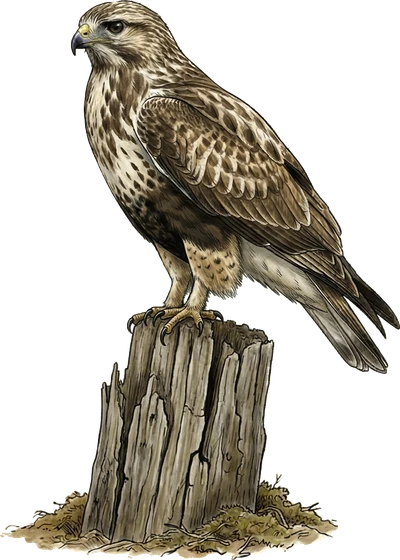
Look for them perched on electricity poles or fence posts along roads. In flight, they hold their wings in a shallow 'V' shape while soaring.
Stats
Wingspan110–132 cm
Weight430–1360 g
Length46–58 cm
Lifespan wild10–25 yrs
Size
XS
S
M
L
XL
Nesting
Nest typePlatform
Clutch size2–4 eggs
Incubation33–35 days
Breeding months
1
2
3
4
5
6
7
8
9
10
11
12
Regional Status (Europe)
LC
Least Concern (Europe)
IUCN Red List
MigrationPartial migratory
Social BehaviourSolitary
Diet: Carnivore
🐸Amphibians
🦅Birds
🦴Carrion
🦗Insects
🐭Mammals
🦎Reptiles
🪱Worms
Habitat
🚜 Farmland🌳 Forest deciduous🌿 Grassland
✦ Fun Fact
In the mid-20th century, the buzzard population was affected by rabbit myxomatosis. This disease killed off the rabbit population, which was buzzards' primary food source.

See Common Buzzard in the app.
Full encyclopedia, offline diary, AI identification - always with you.
Download on Google Play
Full encyclopedia, offline diary, AI identification - always with you.