European Honey Buzzard
Pernis apivorus
Genus ·
Typical Honey-buzzards
Family ·
Hawks, Eagles, and Kites
Observation tips
Difficulty: HARD
Best time
🕒 Any
Activity
☀️ Diurnal
Best months
1
2
3
4
5
6
7
8
9
10
11
12
Observation habitat
Canopy foliageForest clearingsMigration watchpoints
Look for the 'pigeon-headed' silhouette. Unlike the Common Buzzard, it often flies with wings held level or slightly bowed.
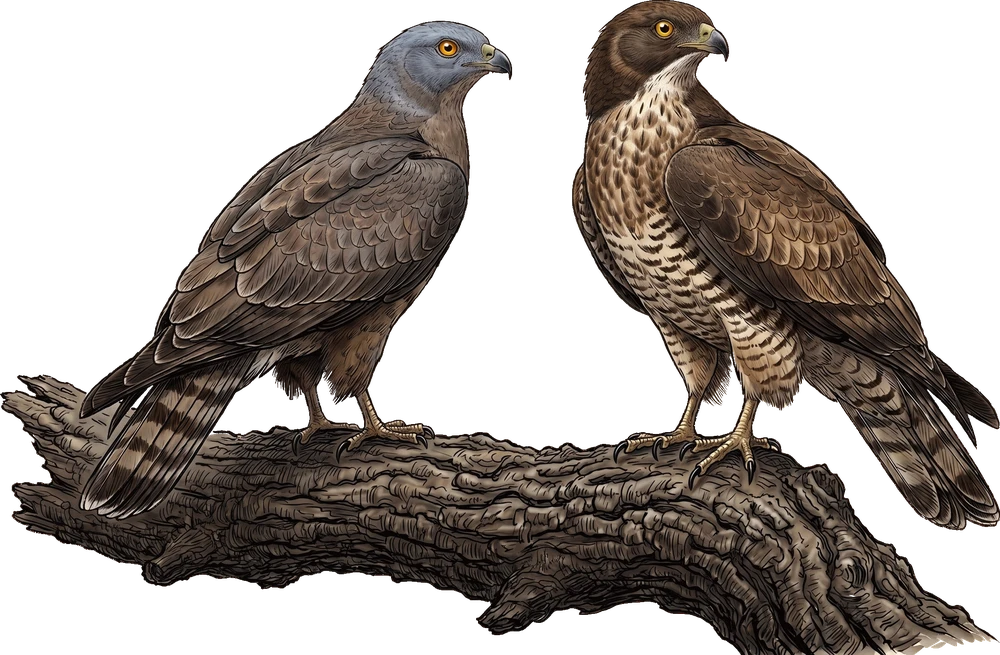
♂ Male · ♀ Female
Stats
Wingspan135–150 cm
Weight440–1050 g
Length52–60 cm
Lifespan wild10–15 yrs
Size
XS
S
M
L
XL
Nesting
Nest typePlatform
Clutch size2 eggs
Incubation30–35 days
Breeding months
1
2
3
4
5
6
7
8
9
10
11
12
Regional Status (Europe)
LC
Least Concern (Europe)
IUCN Red List
MigrationMigratory
Social BehaviourSolitary
Diet: Insectivore
🐸Amphibians
🐝Bees
🍯Honeycomb
Habitat
🌳 Forest deciduous🌲🌳 Forest mixed🌿 Grassland
✦ Fun Fact
Honey Buzzards are long-distance migrants. During autumn, thousands cross narrow sea passages like the Strait of Gibraltar in a single day.
See European Honey Buzzard in the app.
Full encyclopedia, offline diary, AI identification - always with you.
Download on Google Play
Full encyclopedia, offline diary, AI identification - always with you.