European Herring Gull
Larus argentatus
Genus ·
Large White-headed Gulls
Family ·
Gulls, Terns, and Skimmers
Observation tips
Difficulty: EASY
Best time
🕒 Any
Activity
☀️ Diurnal
Best months
1
2
3
4
5
6
7
8
9
10
11
12
Observation habitat
RoofsShorelinesUrban
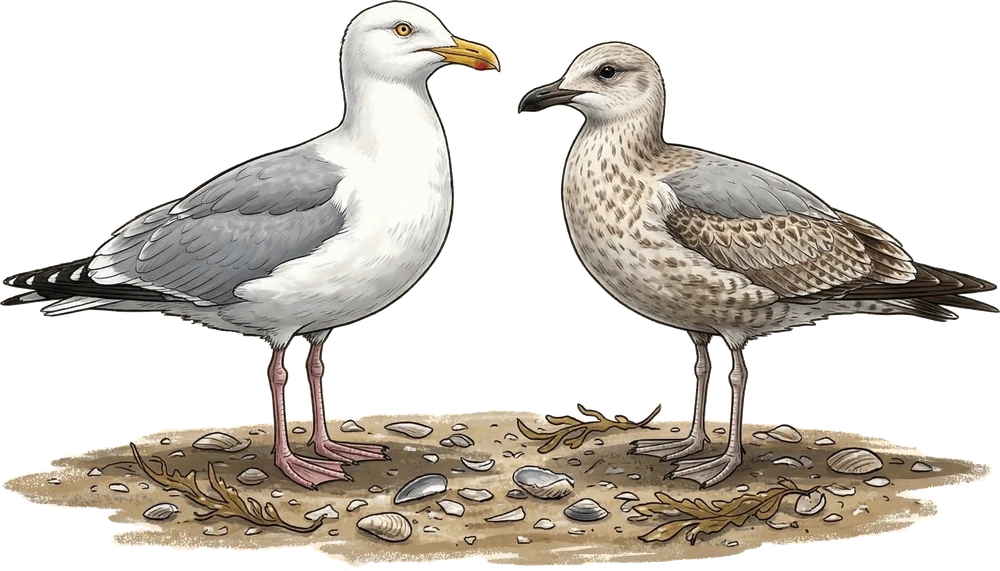
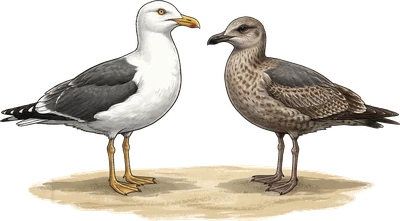
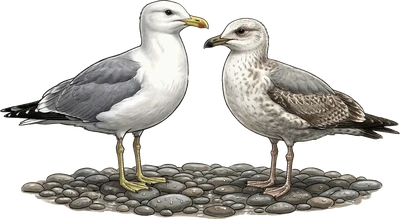
Easy to find in seaside towns. Distinguish it from the Lesser Black-backed Gull by its pale grey back and pink legs.
Stats
Wingspan125–155 cm
Weight700–1500 g
Length55–67 cm
Lifespan wild10–30 yrs
Size
XS
S
M
L
XL
Nesting
Nest typeScrape
Clutch size2–3 eggs
Incubation28–30 days
Breeding months
1
2
3
4
5
6
7
8
9
10
11
12
Regional Status (Europe)
LC
Least Concern (Europe)
IUCN Red List
MigrationPartial migratory
Social BehaviourColonial
Diet: Omnivore
🦴Carrion
🦀Crustaceans
🥚Eggs
🐟Fish
🍕Human food
🐭Mammals
🐚Mollusks
Habitat
🚜 Farmland🛶 Lake wetlands🌊 Marine🏞️ River🏙️ Urban
✦ Fun Fact
The red spot on the parent's bill is a 'target' for chicks. When the chick pecks the spot, it triggers the parent to regurgitate food.
See European Herring Gull in the app.
Full encyclopedia, offline diary, AI identification - always with you.
Download on Google Play
Full encyclopedia, offline diary, AI identification - always with you.