Common Gull
Larus canus
Genus ·
Large White-headed Gulls
Family ·
Gulls, Terns, and Skimmers
Observation tips
Difficulty: EASY
Best time
🕒 Any
Activity
☀️ Diurnal
Best months
1
2
3
4
5
6
7
8
9
10
11
12
Observation habitat
City riverFarmlandLake wetlandsMarine
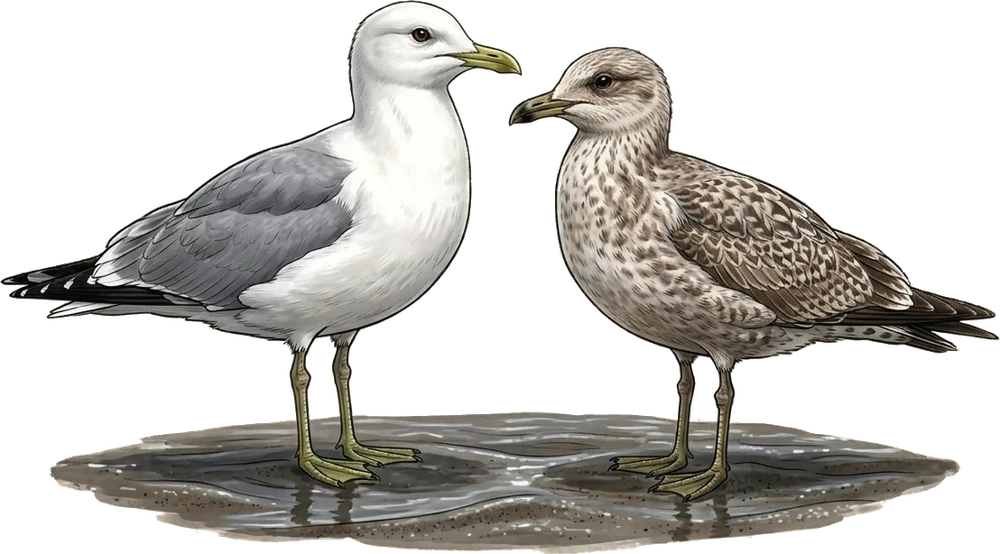
Look for a gull smaller than a Herring Gull with greenish-yellow legs. Its plain yellow-green bill and dark eye are key features.
Stats
Wingspan100–115 cm
Weight290–550 g
Length40–46 cm
Lifespan wild10–24 yrs
Size
XS
S
M
L
XL
Nesting
Nest typeScrape
Clutch size2–3 eggs
Incubation24–26 days
Breeding months
1
2
3
4
5
6
7
8
9
10
11
12
Regional Status (Europe)
LC
Least Concern (Europe)
IUCN Red List
MigrationPartial migratory
Social BehaviourColonial
Diet: Omnivore
🦴Carrion
🐟Fish
🍕Human food
🦗Insects
🐚Mollusks
🪱Worms
Habitat
🚜 Farmland🛶 Lake wetlands🌊 Marine🏞️ River🏙️ Urban
✦ Fun Fact
Common Gulls can show delayed maturity, with many individuals not gaining full adult plumage until their fourth year. During this time, they pass through several distinct “in-between” plumage stages, which can make age identification surprisingly complex even for experienced birders.

See Common Gull in the app.
Full encyclopedia, offline diary, AI identification - always with you.
Download on Google Play
Full encyclopedia, offline diary, AI identification - always with you.