Great Black-backed Gull
Larus marinus
Genus ·
Large White-headed Gulls
Family ·
Gulls, Terns, and Skimmers
Observation tips
Difficulty: EASY
Best time
🕒 Any
Activity
☀️ Diurnal
Best months
1
2
3
4
5
6
7
8
9
10
11
12
Observation habitat
HarborsMarineOffshore waters
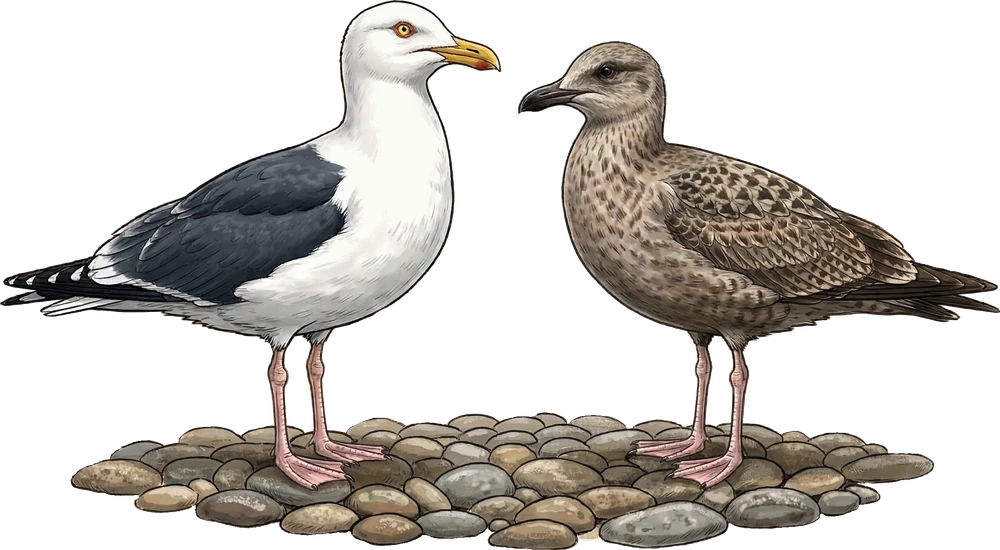
Look for pink legs and sheer size. It is much larger than the Lesser Black-backed Gull, and has pale legs compared to Lesser Black-backed Gull's yellow legs.
Stats
Wingspan150–170 cm
Weight1200–2300 g
Length64–79 cm
Lifespan wild15–30 yrs
Size
XS
S
M
L
XL
Nesting
Nest typeScrape
Clutch size2–3 eggs
Incubation26–30 days
Breeding months
1
2
3
4
5
6
7
8
9
10
11
12
Regional Status (Europe)
LC
Least Concern (Europe)
IUCN Red List
MigrationPartial migratory
Social BehaviourColonial
Diet: Omnivore
🦅Birds
🦴Carrion
🦀Crustaceans
🐟Fish
🐭Mammals
Habitat
🌊 Marine⛰️ Mountains🏞️ River
✦ Fun Fact
Great Black-backed Gulls have an exceptionally wide gape, allowing them to swallow surprisingly large prey whole—they are even capable of consuming a rabbit or a small duck in one gulp.

See Great Black-backed Gull in the app.
Full encyclopedia, offline diary, AI identification - always with you.
Download on Google Play
Full encyclopedia, offline diary, AI identification - always with you.