Barn Swallow
Hirundo rustica
Genus ·
Typical Swallows
Family ·
Swallows and Martins
Observation tips
Difficulty: EASY
Best time
🕒 Any
Activity
☀️ Diurnal
Best months
1
2
3
4
5
6
7
8
9
10
11
12
Observation habitat
FarmlandOpen waterUtility wires
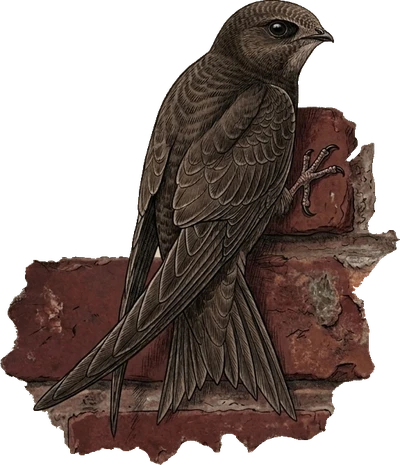
Look for the long forked tail and the dark throat. Unlike House Martins, Barn Swallows do not have a white rump.
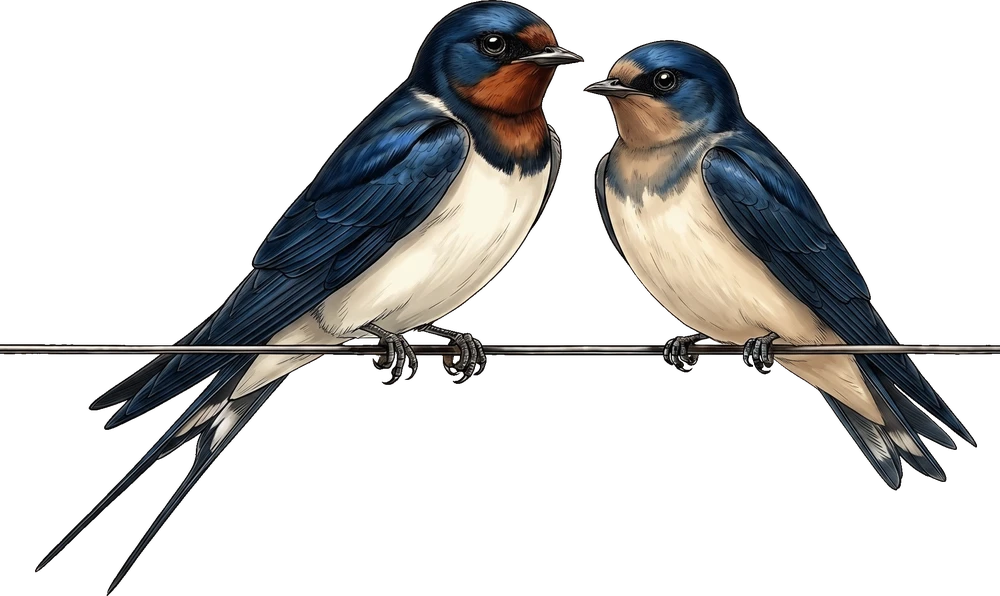
♂ Male · ♀ Female
Stats
Wingspan32–35 cm
Weight16–22 g
Length17–21 cm
Lifespan wild4–11 yrs
Size
XS
S
M
L
XL
Nesting
Nest typeCup
Clutch size4–6 eggs
Incubation14–16 days
Breeding months
1
2
3
4
5
6
7
8
9
10
11
12
Regional Status (Europe)
LC
Least Concern (Europe)
IUCN Red List
MigrationMigratory
Social BehaviourFlocking
Diet: Insectivore
🐝Bees
🦗Insects
Habitat
🚜 Farmland🌿 Grassland🏙️ Urban
✦ Fun Fact
Barn Swallows have a remarkable memory. Many Barn Swallows return to the very same nest after a round-trip migration of up to 10,000 kilometres.


See Barn Swallow in the app.
Full encyclopedia, offline diary, AI identification - always with you.
Download on Google Play
Full encyclopedia, offline diary, AI identification - always with you.