Common Swift
Apus apus
Genus ·
Typical Swifts
Family ·
Swifts
Observation tips
Difficulty: EASY
Best time
🕒 Any
Activity
☀️ Diurnal
Best months
1
2
3
4
5
6
7
8
9
10
11
12
Observation habitat
MountainsUrban
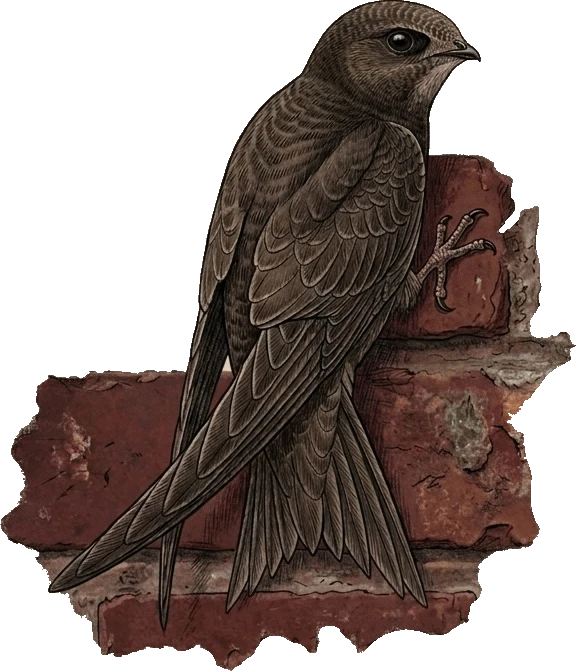
Best seen in urban areas on warm summer evenings. Look for the iconic sickle-shaped wings and listen for high-pitched screaming calls.
Stats
Wingspan42–48 cm
Weight31–55 g
Length16–17 cm
Lifespan wild5–15 yrs
Size
XS
S
M
L
XL
Nesting
Nest typeCavity
Clutch size2–3 eggs
Incubation18–22 days
Breeding months
1
2
3
4
5
6
7
8
9
10
11
12
Regional Status (Europe)
LC
Least Concern (Europe)
IUCN Red List
MigrationMigratory
Social BehaviourColonial
Diet: Insectivore
🦟Air plankton
🦗Insects
Habitat
🌳 Forest deciduous⛰️ Mountains🏙️ Urban
✦ Fun Fact
Once young Common Swifts leave the nest, they can remain continuously airborne for up to 10 months, eating, sleeping, and even mating in flight.

See Common Swift in the app.
Full encyclopedia, offline diary, AI identification - always with you.
Download on Google Play
Full encyclopedia, offline diary, AI identification - always with you.