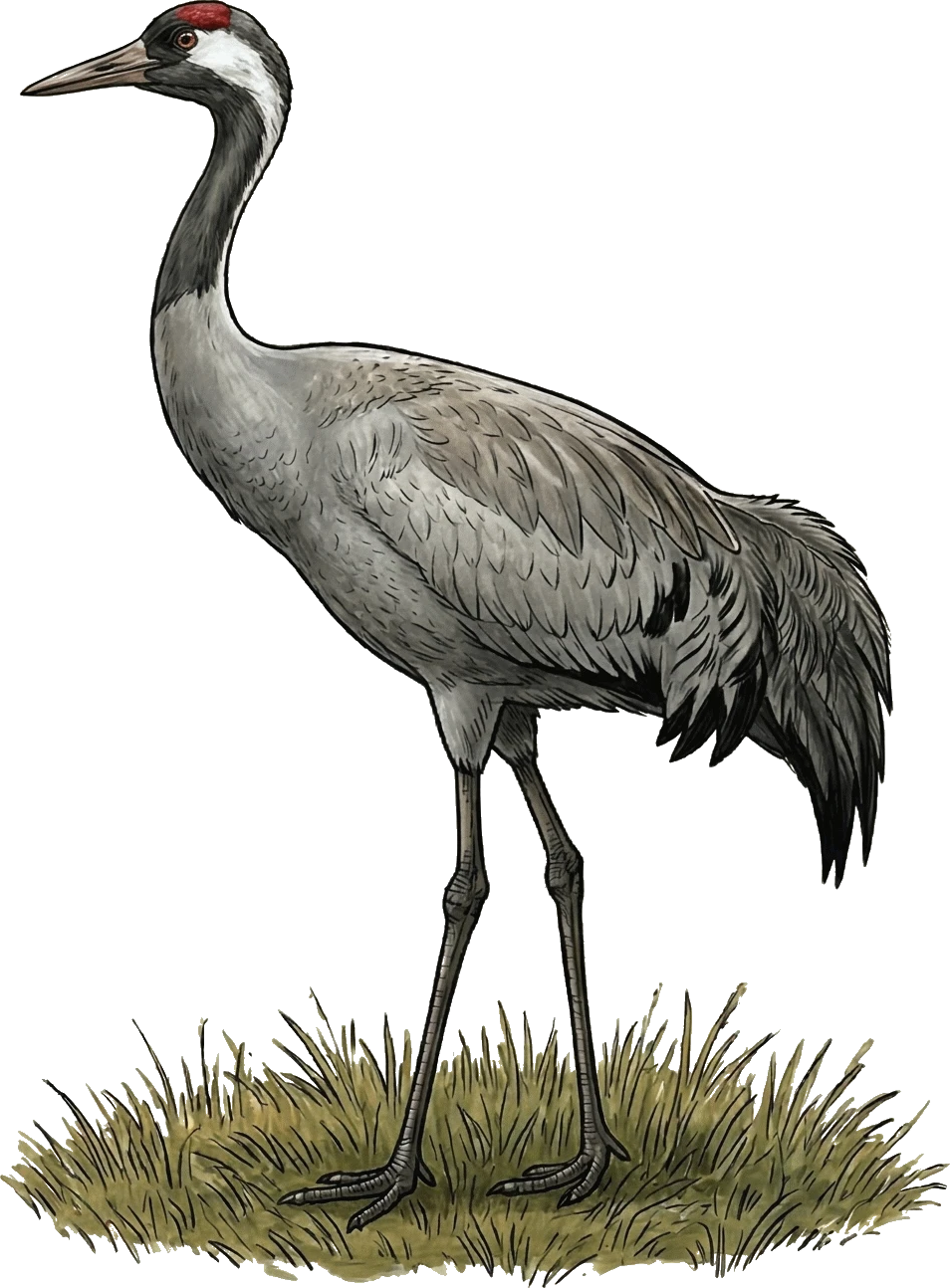
Common Crane
Grus grus
Genus ·
Grus Cranes
Family ·
Cranes
Observation tips
Difficulty: MODERATE
Best time
🕒 Any
Activity
☀️ Diurnal
Best months
1
2
3
4
5
6
7
8
9
10
11
12
Observation habitat
FarmlandLake wetlands
The best time to see them is during spring or autumn migration. Look for them at traditional stopover sites on wetlands and large fields.
Stats
Wingspan180–240 cm
Weight4000–6100 g
Length100–130 cm
Lifespan wild15–26 yrs
Size
XS
S
M
L
XL
Nesting
Nest typeScrape
Clutch size2 eggs
Incubation28–31 days
Breeding months
1
2
3
4
5
6
7
8
9
10
11
12
Regional Status (Europe)
LC
Least Concern (Europe)
IUCN Red List
MigrationMigratory
Social BehaviourFlocking
Diet: Omnivore
🐸Amphibians
🫐Berries
🌾Grain
🦗Insects
🍃Plants
🐍Snakes
Habitat
🌫️ Bog🚜 Farmland🌿 Grassland🛶 Lake wetlands🌾 Marsh
✦ Fun Fact
Cranes are among the oldest living bird families. Fossil records of crane-like birds date back over 40 million years.

See Common Crane in the app.
Full encyclopedia, offline diary, AI identification - always with you.
Download on Google Play
Full encyclopedia, offline diary, AI identification - always with you.