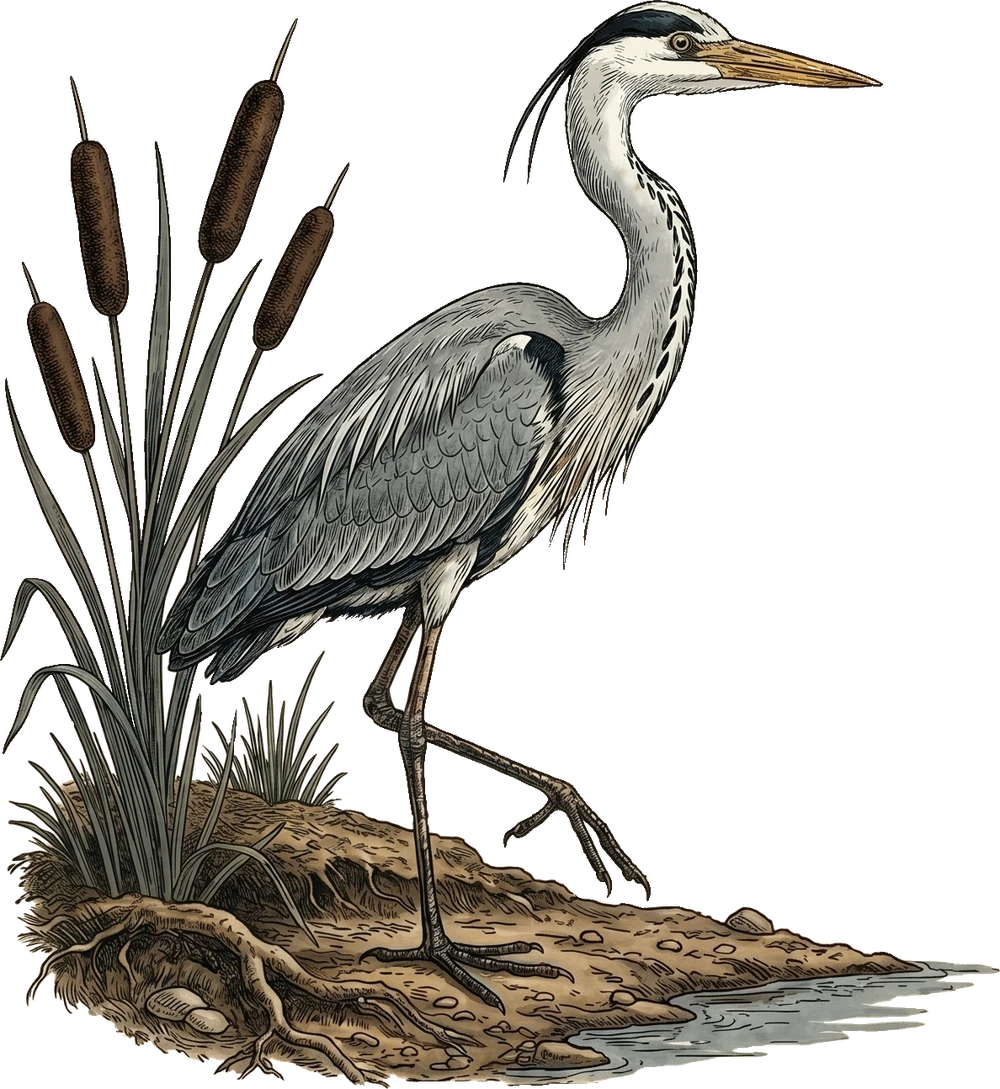
Grey Heron
Ardea cinerea
Genus ·
Great Herons and Egrets
Family ·
Herons, Egrets, and Bitterns
Observation tips
Difficulty: EASY
Best time
🕒 Any
Activity
☀️ Diurnal
Best months
1
2
3
4
5
6
7
8
9
10
11
12
Observation habitat
Lake wetlandsRiver
Very easy to find near water. Look for their silhouettes in tall trees during early spring when they gather in colonies to nest.
Stats
Wingspan155–175 cm
Weight1000–2000 g
Length84–102 cm
Lifespan wild5–15 yrs
Size
XS
S
M
L
XL
Nesting
Nest typePlatform
Clutch size3–5 eggs
Incubation25–28 days
Breeding months
1
2
3
4
5
6
7
8
9
10
11
12
Regional Status (Europe)
LC
Least Concern (Europe)
IUCN Red List
MigrationPartial migratory
Social BehaviourColonial
Diet: Carnivore
🐟Fish
🐸Amphibians
🐭Mammals
🦗Insects
🦀Crustaceans
Habitat
🚜 Farmland🛶 Lake wetlands🌊 Marine🏞️ River
✦ Fun Fact
Grey Herons are opportunistic hunters with an incredibly varied diet. Besides fish, they swallow prey such as voles, young birds, and amphibians whole, later regurgitating indigestible bones, fur, and feathers as pellets.

See Grey Heron in the app.
Full encyclopedia, offline diary, AI identification - always with you.
Download on Google Play
Full encyclopedia, offline diary, AI identification - always with you.