Purple Heron
Ardea purpurea
Genus ·
Great Herons and Egrets
Family ·
Herons, Egrets, and Bitterns
Observation tips
Difficulty: HARD
Best time
🕒 Any
Activity
☀️ Diurnal
Best months
1
2
3
4
5
6
7
8
9
10
11
12
Observation habitat
Lake wetlandsMarsh
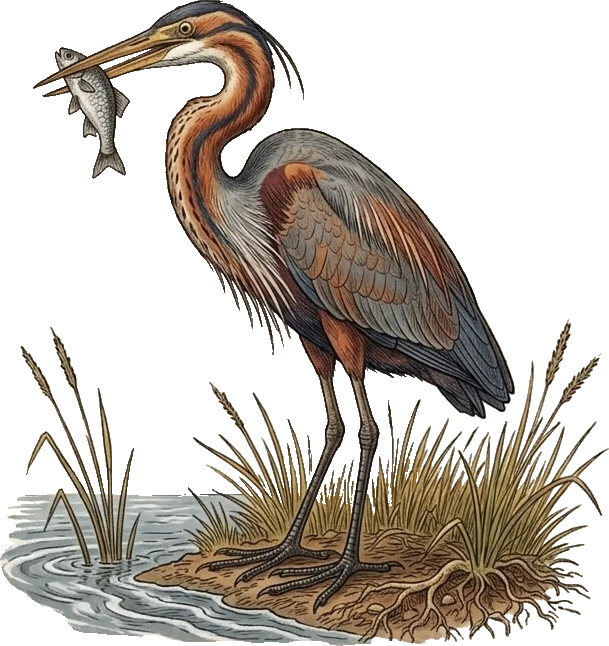
Scan the edges of large, old reedbeds at dawn or dusk. Look for a heron that appears darker and skinnier than a Grey Heron.
Stats
Wingspan120–150 cm
Weight500–1350 g
Length70–94 cm
Lifespan wild5–15 yrs
Size
XS
S
M
L
XL
Nesting
Nest typePlatform
Clutch size3–5 eggs
Incubation25–28 days
Breeding months
1
2
3
4
5
6
7
8
9
10
11
12
Regional Status (Europe)
LC
Least Concern (Europe)
IUCN Red List
MigrationMigratory
Social BehaviourSolitary
Diet: Carnivore
🐟Fish
🐸Amphibians
🦎Reptiles
🦗Insects
🦀Crustaceans
Habitat
🛶 Lake wetlands🌾 Marsh
✦ Fun Fact
Purple Herons are long-distance migrants, travelling from Europe to tropical Africa each autumn. Their journey takes them across the Mediterranean Sea and the Sahara Desert, fueled by fat reserves built up before migration.
See Purple Heron in the app.
Full encyclopedia, offline diary, AI identification - always with you.
Download on Google Play
Full encyclopedia, offline diary, AI identification - always with you.