Eurasian Coot
Fulica atra
Genus ·
Coots
Family ·
Rails, Gallinules, and Coots
Observation tips
Difficulty: EASY
Best time
🕒 Any
Activity
☀️ Diurnal
Best months
1
2
3
4
5
6
7
8
9
10
11
12
Observation habitat
Lake wetlandsUrban
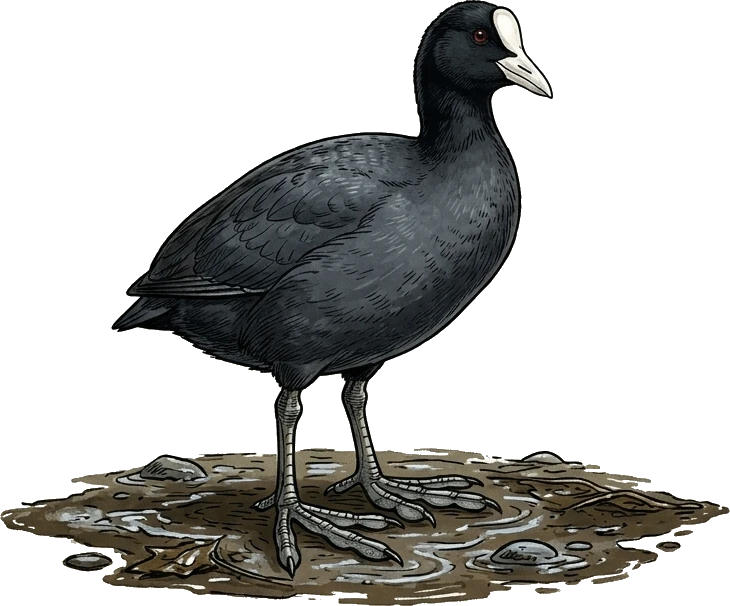
Look for the white forehead shield. Identify them by their black body, red eye, and the way they 'nod' their heads while swimming.
Stats
Wingspan70–80 cm
Weight575–1100 g
Length36–42 cm
Lifespan wild5–18 yrs
Size
XS
S
M
L
XL
Nesting
Nest typePlatform
Clutch size5–10 eggs
Incubation21–24 days
Breeding months
1
2
3
4
5
6
7
8
9
10
11
12
Regional Status (Europe)
LC
Least Concern (Europe)
IUCN Red List
MigrationPartial migratory
Social BehaviourTerritorial
Diet: Omnivore
🐟Fish
🦗Insects
🐚Mollusks
🍃Plants
Habitat
🛶 Lake wetlands🌊 Marine🏞️ River
✦ Fun Fact
Coot chicks are very colorful. They have bright red heads and orange 'beards'. This appearance stimulates parents to feed them more frequently.

See Eurasian Coot in the app.
Full encyclopedia, offline diary, AI identification - always with you.
Download on Google Play
Full encyclopedia, offline diary, AI identification - always with you.