Carrion Crow
Corvus corone
Genus ·
Crows and Ravens
Family ·
Crows, Jays, and Magpies
Observation tips
Difficulty: EASY
Best time
🕒 Any
Activity
☀️ Diurnal
Best months
1
2
3
4
5
6
7
8
9
10
11
12
Observation habitat
FarmlandMarineUrban
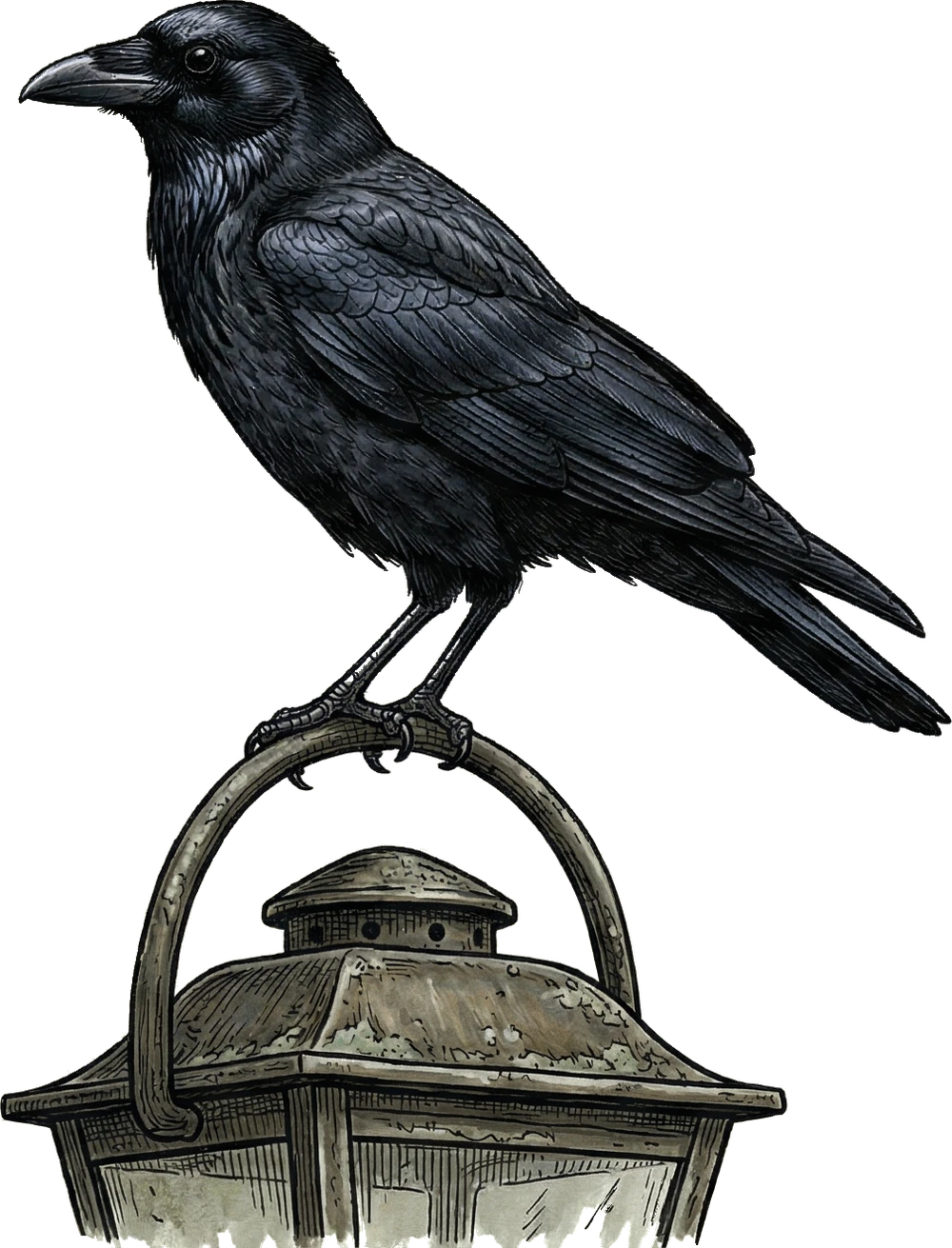
Look for the entirely black bill (the similar Rook has a bare, greyish base). It is more solitary than the colony-nesting Rook.
Stats
Wingspan84–100 cm
Weight370–650 g
Length44–52 cm
Lifespan wild5–20 yrs
Size
XS
S
M
L
XL
Nesting
Nest typePlatform
Clutch size3–6 eggs
Incubation18–20 days
Breeding months
1
2
3
4
5
6
7
8
9
10
11
12
Regional Status (Europe)
LC
Least Concern (Europe)
IUCN Red List
MigrationResident
Social BehaviourMonogamous pairs
Diet: Omnivore
🦴Carrion
🥚Eggs
🦗Insects
🐭Mammals
🐚Mollusks
🌻Seeds
🪱Worms
Habitat
🚜 Farmland🌳 Forest deciduous🌊 Marine🏙️ Urban
✦ Fun Fact
Studies show that Carrion Crows can count. They even understand the concept of zero, putting their intelligence on par with some primates.

See Carrion Crow in the app.
Full encyclopedia, offline diary, AI identification - always with you.
Download on Google Play
Full encyclopedia, offline diary, AI identification - always with you.