Hooded Crow
Corvus cornix
Genus ·
Crows and Ravens
Family ·
Crows, Jays, and Magpies
Observation tips
Difficulty: EASY
Best time
🕒 Any
Activity
☀️ Diurnal
Best months
1
2
3
4
5
6
7
8
9
10
11
12
Observation habitat
FarmlandUrban
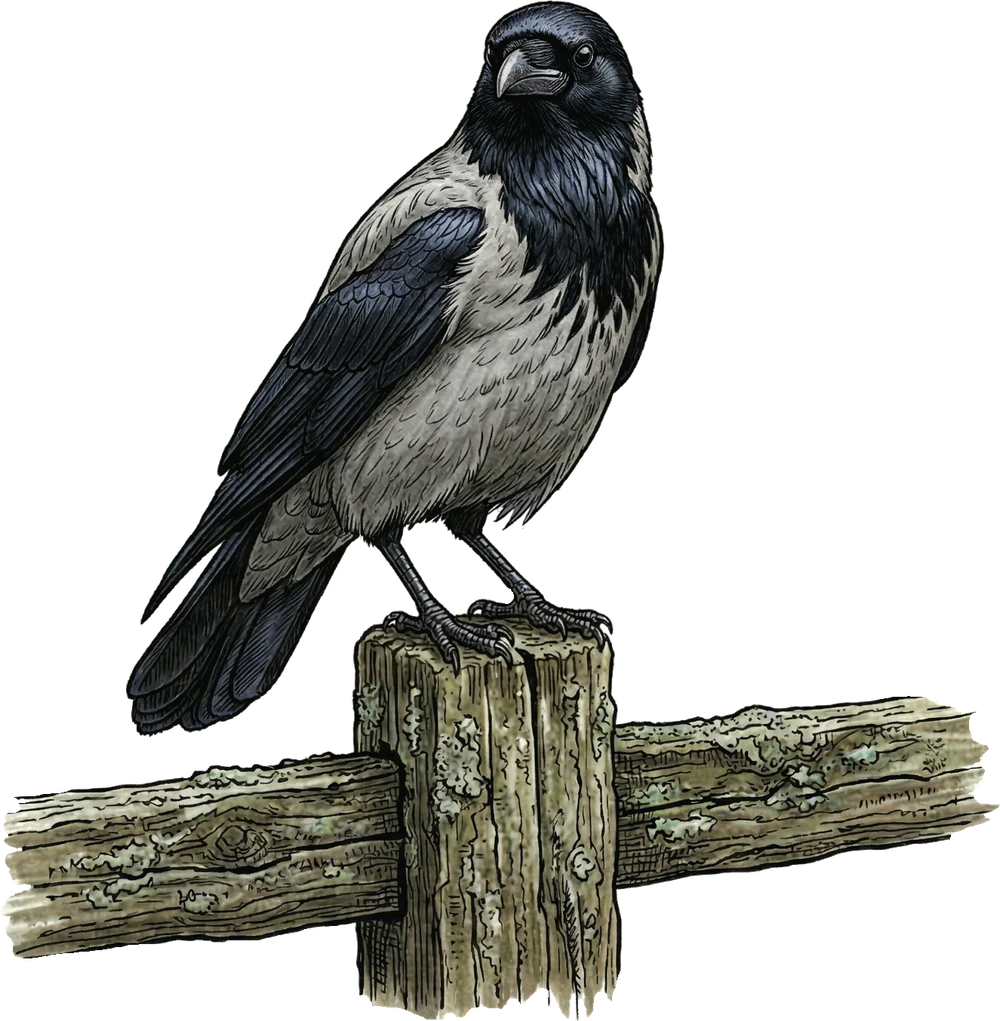
Look for the obvious grey 'vest' against the black plumage. They are common in Scandinavia, Eastern Europe, and the Scottish Highlands.
Stats
Wingspan84–105 cm
Weight400–650 g
Length48–52 cm
Lifespan wild5–18 yrs
Size
XS
S
M
L
XL
Nesting
Nest typePlatform
Clutch size3–6 eggs
Incubation17–20 days
Breeding months
1
2
3
4
5
6
7
8
9
10
11
12
Regional Status (Europe)
LC
Least Concern (Europe)
IUCN Red List
MigrationResident
Social BehaviourTerritorial
Diet: Omnivore
🦴Carrion
🥚Eggs
🌾Grain
🍕Human food
🦗Insects
🐭Mammals
🪱Worms
Habitat
🚜 Farmland🌳 Forest deciduous🌊 Marine🏙️ Urban
✦ Fun Fact
In areas where Hooded and Carrion Crows meet, they frequently interbreed. This produces offspring with a mix of grey and black plumage.

See Hooded Crow in the app.
Full encyclopedia, offline diary, AI identification - always with you.
Download on Google Play
Full encyclopedia, offline diary, AI identification - always with you.