Meadow Pipit
Anthus pratensis
Genus ·
Pipits
Family ·
Wagtails and Pipits
Observation tips
Difficulty: MODERATE
Best time
🕒 Any
Activity
☀️ Diurnal
Best months
1
2
3
4
5
6
7
8
9
10
11
12
Observation habitat
FarmlandGrasslandLake wetlands
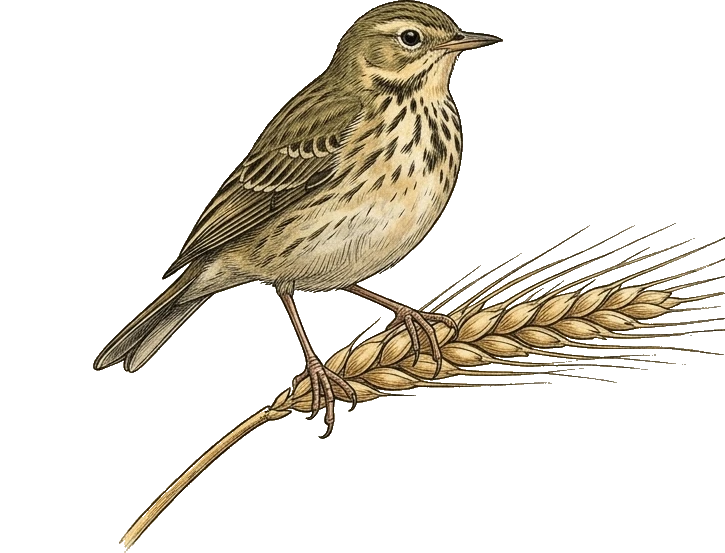
Look for small, streaky brown birds walking on the ground in open areas. They are very nervous: they often flick their tails and take flight with a characteristic thin, high-pitched call.
Stats
Wingspan22–25 cm
Weight15–22 g
Length14–15 cm
Lifespan wild2–4 yrs
Size
XS
S
M
L
XL
Nesting
Nest typeScrape
Clutch size4–6 eggs
Incubation12–14 days
Breeding months
1
2
3
4
5
6
7
8
9
10
11
12
Regional Status (Europe)
NT
Near Threatened (Europe)
IUCN Red List
MigrationPartial migratory
Social BehaviourSolitary
Diet: Insectivore
🦗Insects
🕷️Spiders
🌻Seeds
🐛Larvae
Habitat
🚜 Farmland🌿 Grassland🛶 Lake wetlands🏜️ Scrub wasteland❄️ Tundra
✦ Fun Fact
Many Meadow Pipits successfully raise two broods in a single breeding season, helping them remain one of Europe's most widespread grassland birds.


See Meadow Pipit in the app.
Full encyclopedia, offline diary, AI identification - always with you.
Download on Google Play
Full encyclopedia, offline diary, AI identification - always with you.