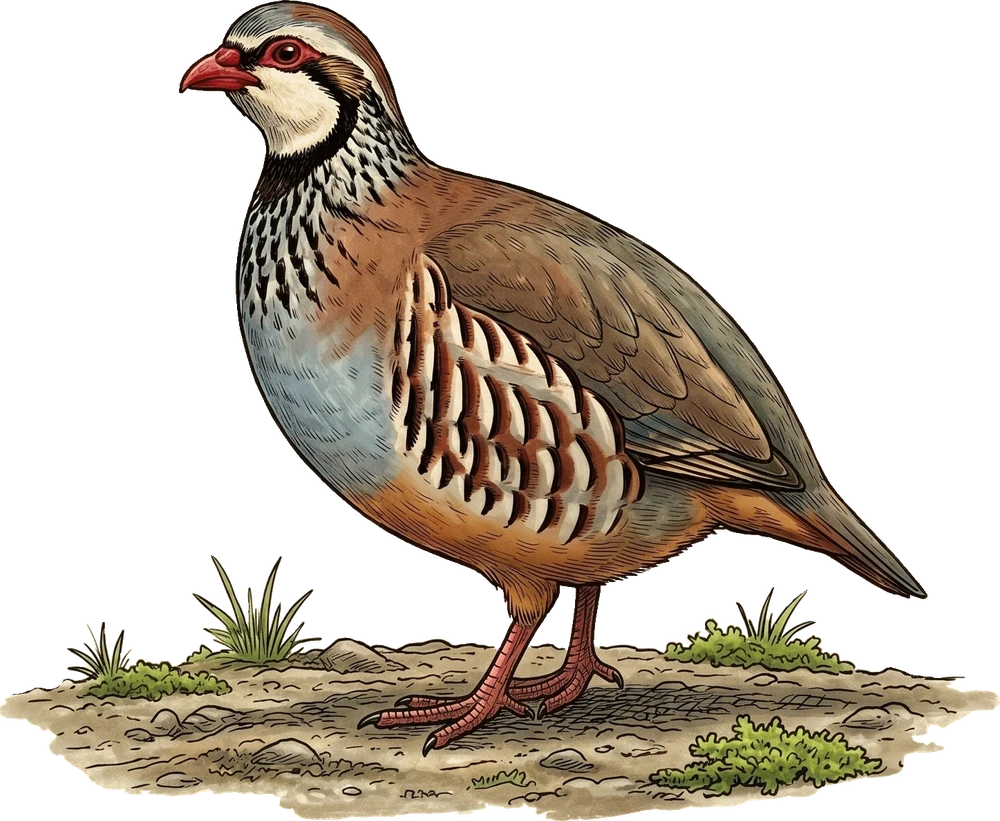
Red-legged Partridge
Alectoris rufa
Genus ·
Rock Partridges
Family ·
Pheasants, Grouse, and Allies
Observation tips
Difficulty: MODERATE
Best time
🌅 Early morning
Activity
☀️ Diurnal
Best months
1
2
3
4
5
6
7
8
9
10
11
12
Observation habitat
FarmlandGrasslandScrub wasteland
Look for them along field margins and farm tracks in the early morning. They often perch on top of stone walls to scan for danger.
Stats
Wingspan47–50 cm
Weight400–550 g
Length32–35 cm
Lifespan wild2–5 yrs
Size
XS
S
M
L
XL
Nesting
Nest typeScrape
Clutch size10–16 eggs
Incubation23–25 days
Breeding months
1
2
3
4
5
6
7
8
9
10
11
12
Regional Status (Europe)
NT
Near Threatened (Europe)
IUCN Red List
MigrationResident
Social BehaviourMonogamous pairs
Diet: Omnivore
🌻Seeds
🦗Insects
🍃Plants
🫐Berries
Habitat
🚜 Farmland🌿 Grassland⛰️ Mountains🏜️ Scrub wasteland
✦ Fun Fact
This species sometimes practices 'double-clutching'. The female lays two separate nests of eggs. She incubates one, while the male hatches the other.
See Red-legged Partridge in the app.
Full encyclopedia, offline diary, AI identification - always with you.
Download on Google Play
Full encyclopedia, offline diary, AI identification - always with you.