Grey Partridge
Perdix perdix
Genus ·
Perdix Partridges
Family ·
Pheasants, Grouse, and Allies
Observation tips
Difficulty: MODERATE
Best time
🕒 Any
Activity
☀️ Diurnal
Best months
1
2
3
4
5
6
7
8
9
10
11
12
Observation habitat
FarmlandField marginsUrban
Look for them in field corners or along hedges at dawn or dusk. Their orange faces are distinctive against their grey bodies.
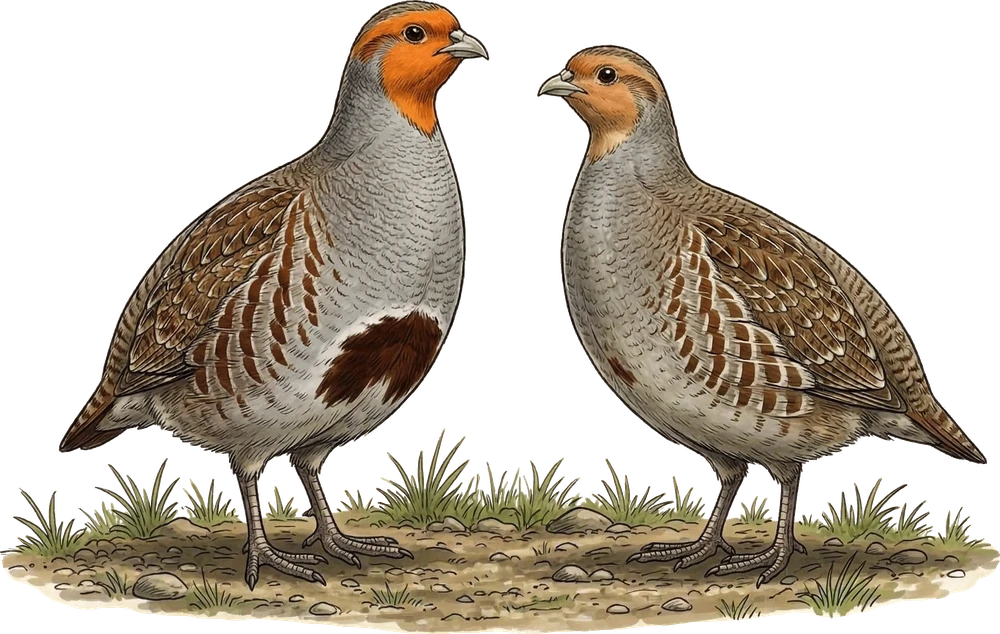
♂ Male · ♀ Female
Stats
Wingspan45–48 cm
Weight350–500 g
Length29–32 cm
Lifespan wild2–5 yrs
Size
XS
S
M
L
XL
Nesting
Nest typeScrape
Clutch size10–20 eggs
Incubation23–25 days
Breeding months
1
2
3
4
5
6
7
8
9
10
11
12
Regional Status (Europe)
LC
Least Concern (Europe)
IUCN Red List
MigrationResident
Social BehaviourFlocking
Diet: Omnivore
🌾Grain
🦗Insects
🍃Plants
🌻Seeds
Habitat
🚜 Farmland🌿 Grassland
✦ Fun Fact
The Grey Partridge is incredibly prolific. A single nest can contain up to 20 eggs. This is one of the largest clutch sizes of any European bird.
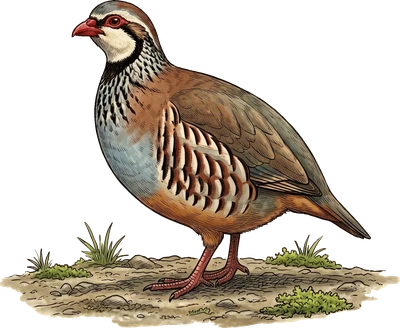
See Grey Partridge in the app.
Full encyclopedia, offline diary, AI identification - always with you.
Download on Google Play
Full encyclopedia, offline diary, AI identification - always with you.