Green Sandpiper
Tringa ochropus
Genus ·
Shanks, Tattlers, and Allies
Family ·
Sandpipers and Allies
Observation tips
Difficulty: MODERATE
Best time
🕒 Any
Activity
☀️ Diurnal
Best months
1
2
3
4
5
6
7
8
9
10
11
12
Observation habitat
Muddy marginsOverhanging vegetationShaded margins
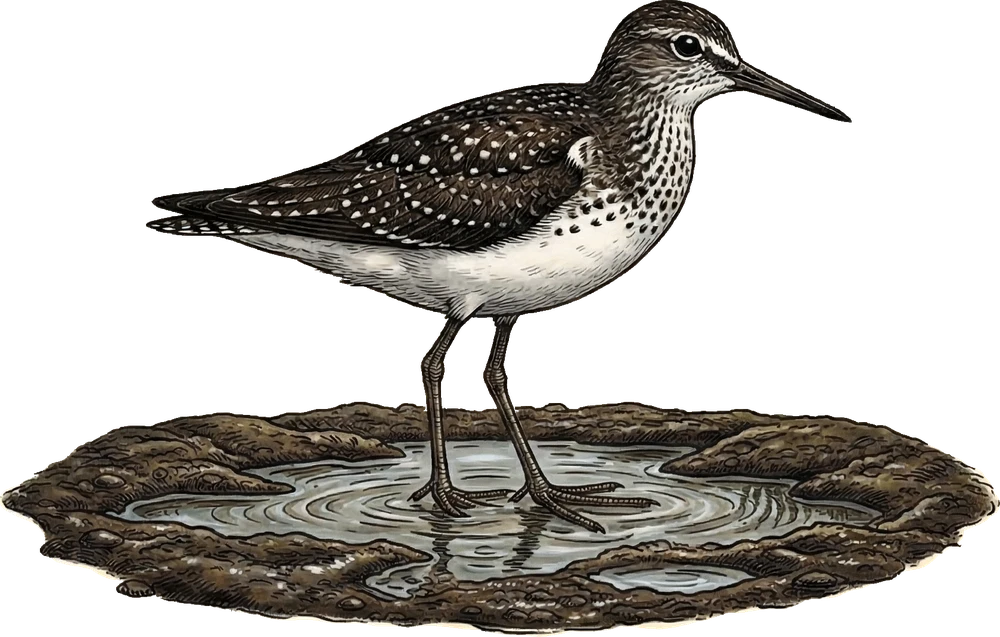
Look for the stark contrast between the blackish back and pure white rump in flight. They lack white wing-bars.
Stats
Wingspan57–61 cm
Weight50–110 g
Length21–24 cm
Lifespan wild5–11 yrs
Size
XS
S
M
L
XL
Nesting
Nest typeOld nest
Clutch size4 eggs
Incubation20–23 days
Breeding months
1
2
3
4
5
6
7
8
9
10
11
12
Regional Status (Europe)
LC
Least Concern (Europe)
IUCN Red List
MigrationPartial migratory
Social BehaviourSolitary
Diet: Insectivore
🦀Crustaceans
🦗Insects
🐌Snails
🪱Worms
Habitat
🌳 Forest deciduous🛶 Lake wetlands🏞️ River
✦ Fun Fact
Unlike almost all other waders, the Green Sandpiper regularly nests off the ground, using old tree nests built by other birds, sometimes several metres above the ground.

See Green Sandpiper in the app.
Full encyclopedia, offline diary, AI identification - always with you.
Download on Google Play
Full encyclopedia, offline diary, AI identification - always with you.