Little Ringed Plover
Charadrius dubius
Genus ·
Holarctic Ringed Plovers and Allies
Family ·
Plovers and Lapwings
Observation tips
Difficulty: MODERATE
Best time
🕒 Any
Activity
☀️ Diurnal
Best months
1
2
3
4
5
6
7
8
9
10
11
12
Observation habitat
Muddy marginsOpen groundSand bars
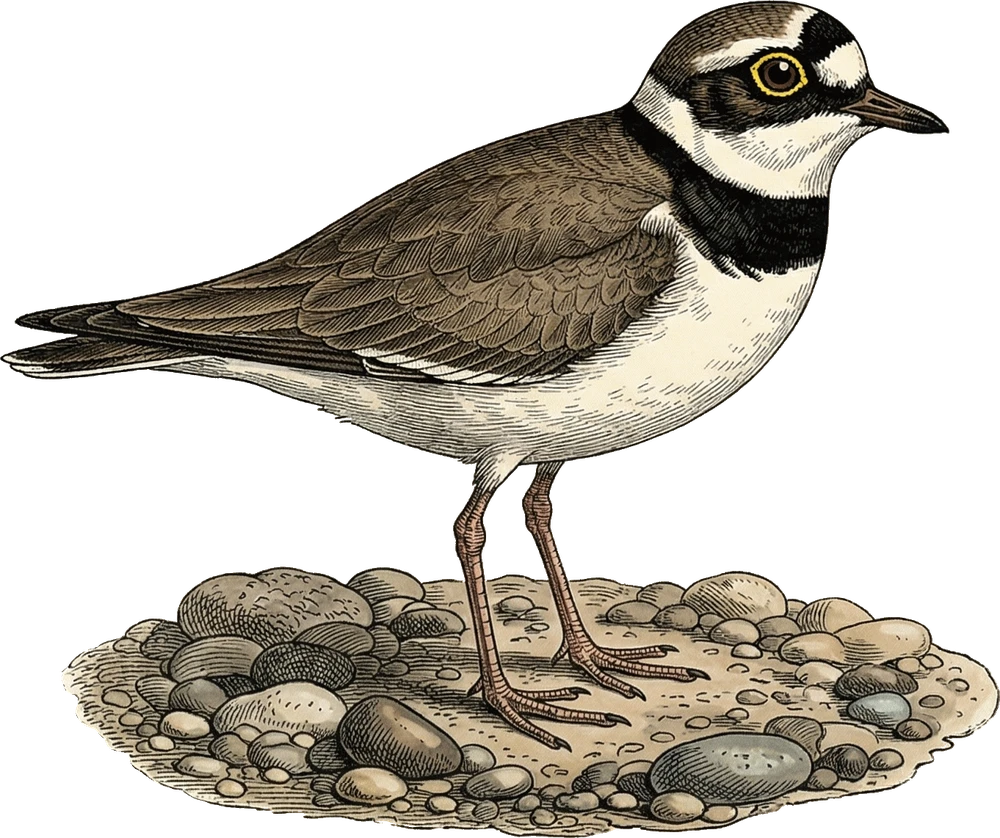
Look for the bright yellow eye-ring. Check inland gravel pits and the muddy edges of reservoirs.
Stats
Wingspan42–48 cm
Weight25–48 g
Length14–17 cm
Lifespan wild2–10 yrs
Size
XS
S
M
L
XL
Nesting
Nest typeScrape
Clutch size3–4 eggs
Incubation22–28 days
Breeding months
1
2
3
4
5
6
7
8
9
10
11
12
Regional Status (Europe)
LC
Least Concern (Europe)
IUCN Red List
MigrationMigratory
Social BehaviourSolitary
Diet: Carnivore
🦗Insects
🐚Mollusks
🕷️Spiders
🪱Worms
Habitat
🌊 Marine🏞️ River🏜️ Scrub wasteland🏙️ Urban
✦ Fun Fact
Newly hatched Little Ringed Plovers can run and feed themselves within hours of leaving the egg, even though they still depend on their parents for protection.
See Little Ringed Plover in the app.
Full encyclopedia, offline diary, AI identification - always with you.
Download on Google Play
Full encyclopedia, offline diary, AI identification - always with you.