Common Ringed Plover
Charadrius hiaticula
Genus ·
Holarctic Ringed Plovers and Allies
Family ·
Plovers and Lapwings
Observation tips
Difficulty: EASY
Best time
🕒 Any
Activity
☀️ Diurnal
Best months
1
2
3
4
5
6
7
8
9
10
11
12
Observation habitat
Marine
Look for them on sandy beaches or shingle banks. Their 'necklace' is much thicker and bolder than that of the Little Ringed Plover. They lack a yellow eye-ring.
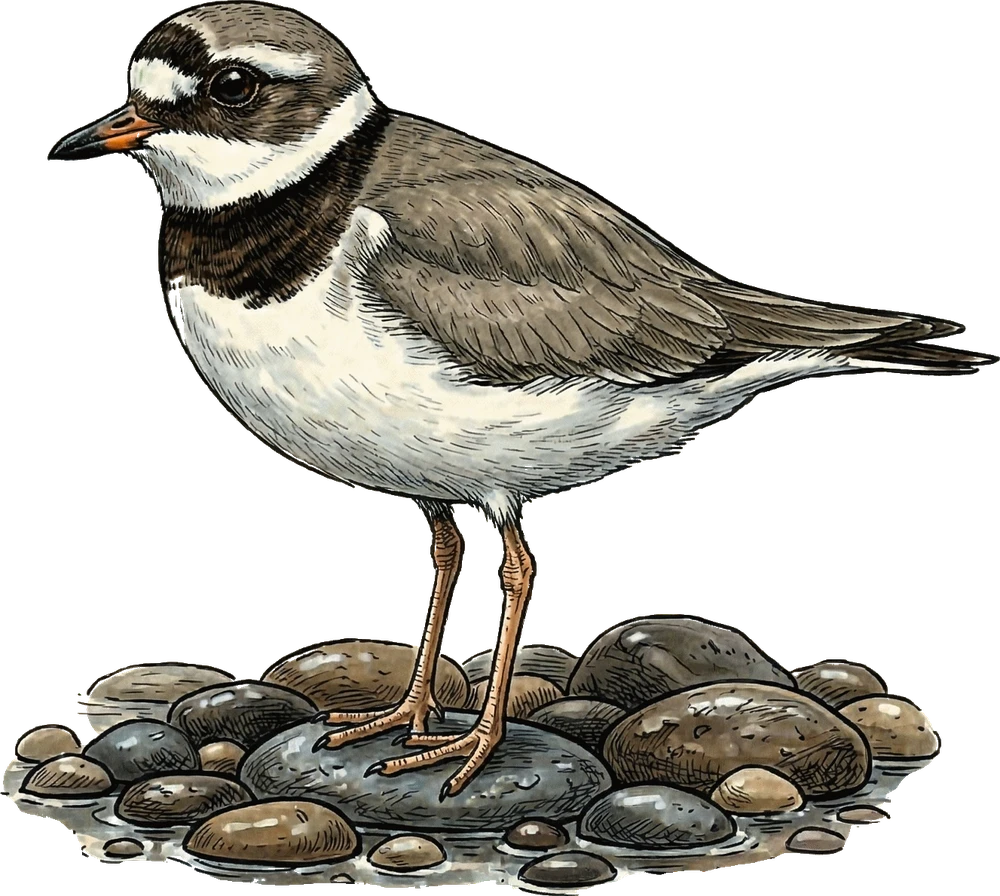
♂ Male · ♀ Female
Stats
Wingspan48–57 cm
Weight40–80 g
Length17–20 cm
Lifespan wild5–15 yrs
Size
XS
S
M
L
XL
Nesting
Nest typeScrape
Clutch size4 eggs
Incubation23–25 days
Breeding months
1
2
3
4
5
6
7
8
9
10
11
12
Regional Status (Europe)
LC
Least Concern (Europe)
IUCN Red List
MigrationMigratory
Social BehaviourMonogamous pairs
Diet: Carnivore
🦗Insects
🪱Worms
🦀Crustaceans
🐚Mollusks
Habitat
🌊 Marine🏞️ River❄️ Tundra
✦ Fun Fact
Common Ringed Plovers are remarkably loyal to their nesting sites. Some pairs return to the exact same few square metres of beach for many consecutive years.

See Common Ringed Plover in the app.
Full encyclopedia, offline diary, AI identification - always with you.
Download on Google Play
Full encyclopedia, offline diary, AI identification - always with you.