Ruddy Turnstone
Arenaria interpres
Genus ·
Turnstones
Family ·
Sandpipers and Allies
Observation tips
Difficulty: EASY
Best time
🕒 Any
Activity
☀️ Diurnal
Best months
1
2
3
4
5
6
7
8
9
10
11
12
Observation habitat
Marine
Look for them on rocky coasts or harbor stone walls. In winter, they become mostly dark brown and white, but the orange legs remain a key identifier.
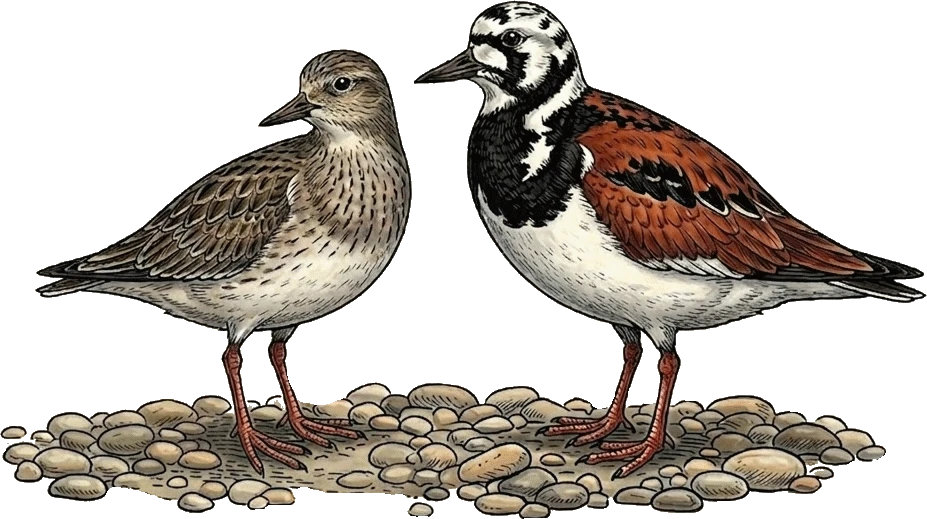
♂ Male · ♀ Female
Stats
Wingspan50–57 cm
Weight84–190 g
Length21–26 cm
Lifespan wild5–15 yrs
Size
XS
S
M
L
XL
Nesting
Nest typeScrape
Clutch size3–4 eggs
Incubation22–24 days
Breeding months
1
2
3
4
5
6
7
8
9
10
11
12
Regional Status (Europe)
LC
Least Concern (Europe)
IUCN Red List
MigrationMigratory
Social BehaviourFlocking
Diet: Omnivore
🦗Insects
🦀Crustaceans
🐚Mollusks
🪱Worms
🥚Eggs
🦴Carrion
Habitat
🌊 Marine❄️ Tundra
✦ Fun Fact
Turnstones are highly opportunistic feeders. They may eat fish carrion and also take advantage of human food scraps left on beaches.
See Ruddy Turnstone in the app.
Full encyclopedia, offline diary, AI identification - always with you.
Download on Google Play
Full encyclopedia, offline diary, AI identification - always with you.