Tawny Owl
Strix aluco
Genus ·
Wood Owls and Allies
Family ·
Typical Owls
Observation tips
Difficulty: HARD
Best time
🌙 Night
Activity
🌙 Nocturnal
Best months
1
2
3
4
5
6
7
8
9
10
11
12
Observation habitat
Dense foliageNest boxesRoofsTree hollows
Listen for hooting at dusk or dawn. Look for pellets (bones and fur) at the base of old trees during the day.
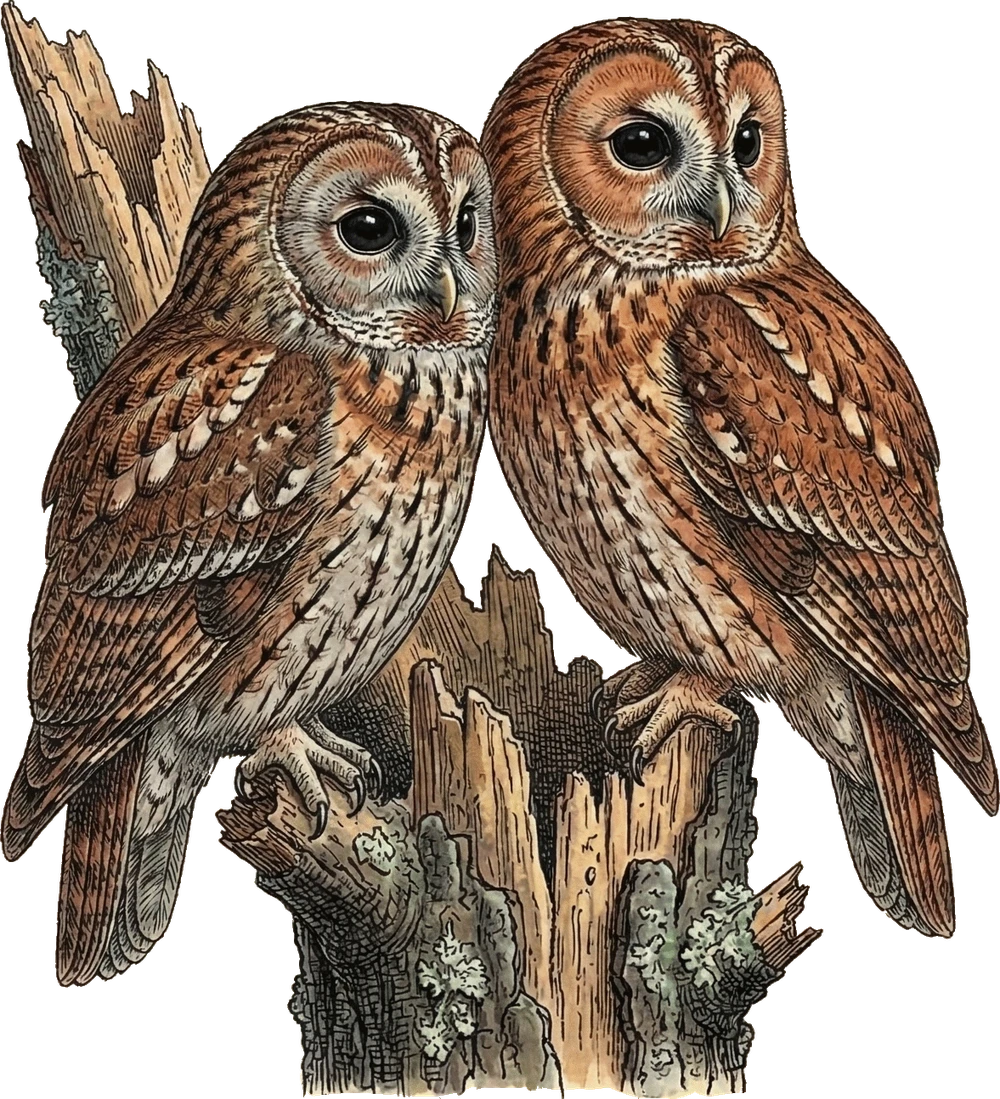
♂ Male · ♀ Female
Stats
Wingspan81–105 cm
Weight380–800 g
Length37–46 cm
Lifespan wild4–18 yrs
Size
XS
S
M
L
XL
Nesting
Nest typeCavity
Clutch size2–3 eggs
Incubation28–30 days
Breeding months
1
2
3
4
5
6
7
8
9
10
11
12
Regional Status (Europe)
LC
Least Concern (Europe)
IUCN Red List
MigrationResident
Social BehaviourSolitary
Diet: Carnivore
🐸Amphibians
🦅Birds
🦗Insects
🐭Mammals
🪱Worms
Habitat
🌳 Forest deciduous🌲🌳 Forest mixed🏡 Garden🏙️ Urban
✦ Fun Fact
Tawny Owls have asymmetrical ears that help them pinpoint prey in complete darkness by detecting tiny differences in how sound reaches each ear.

See Tawny Owl in the app.
Full encyclopedia, offline diary, AI identification - always with you.
Download on Google Play
Full encyclopedia, offline diary, AI identification - always with you.