Long-eared Owl
Asio otus
Genus ·
Eared Owls and Allies
Family ·
Typical Owls
Observation tips
Difficulty: MODERATE
Best time
🌙 Night
Activity
🌙 Nocturnal
Best months
1
2
3
4
5
6
7
8
9
10
11
12
Observation habitat
FarmlandForest deciduousUrban
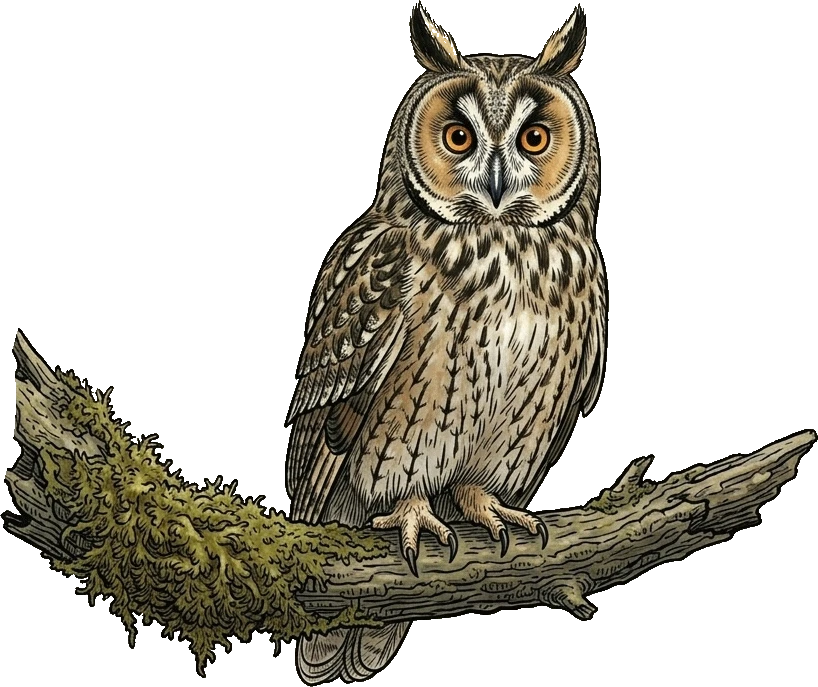
Very difficult to see during the day. Look for 'pellets' and white droppings at the base of dense conifers. Scan the branches above for a vertical, stick-like silhouette.
Stats
Wingspan86–100 cm
Weight200–430 g
Length31–37 cm
Lifespan wild4–10 yrs
Size
XS
S
M
L
XL
Nesting
Nest typeOld nest
Clutch size3–8 eggs
Incubation25–30 days
Breeding months
1
2
3
4
5
6
7
8
9
10
11
12
Regional Status (Europe)
LC
Least Concern (Europe)
IUCN Red List
MigrationPartial migratory
Social BehaviourFlocking
Diet: Carnivore
🐭Mammals
🦅Birds
🦗Insects
Habitat
🚜 Farmland🌳 Forest deciduous🏙️ Urban
✦ Fun Fact
The Long-eared Owl rarely builds its own nest. It almost exclusively uses the abandoned stick nests of crows, magpies, or squirrels.
See Long-eared Owl in the app.
Full encyclopedia, offline diary, AI identification - always with you.
Download on Google Play
Full encyclopedia, offline diary, AI identification - always with you.