Common Tern
Sterna hirundo
Genus ·
Typical Terns
Family ·
Gulls, Terns, and Skimmers
Observation tips
Difficulty: EASY
Best time
🕒 Any
Activity
☀️ Diurnal
Best months
1
2
3
4
5
6
7
8
9
10
11
12
Observation habitat
HarborsOpen waterRiver banksScrub wasteland
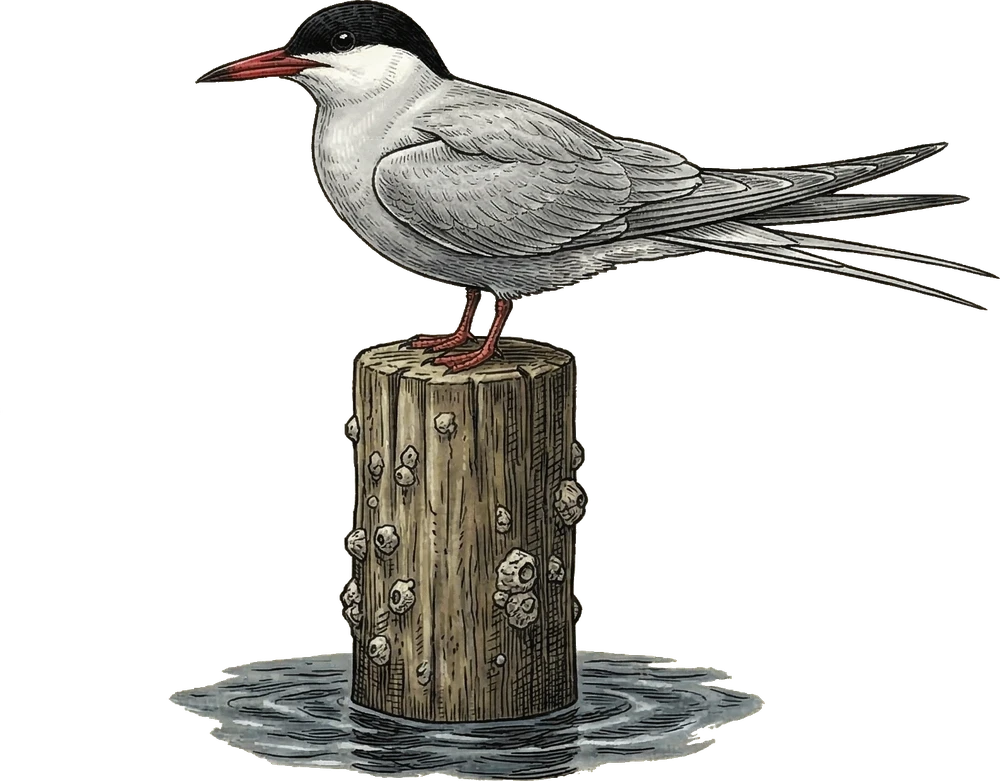
Look for the red bill with a black tip. Arctic Terns have solid red bills. Watch for the dramatic plunge-diving action.
Stats
Wingspan77–98 cm
Weight90–150 g
Length31–37 cm
Lifespan wild10–28 yrs
Size
XS
S
M
L
XL
Nesting
Nest typeScrape
Clutch size2–3 eggs
Incubation21–26 days
Breeding months
1
2
3
4
5
6
7
8
9
10
11
12
Regional Status (Europe)
LC
Least Concern (Europe)
IUCN Red List
MigrationMigratory
Social BehaviourColonial
Diet: Piscivore
🦀Crustaceans
🐟Fish
🦗Insects
Habitat
🛶 Lake wetlands🌊 Marine🏞️ River
✦ Fun Fact
Terns are among the world's greatest travelers. A Common Tern can cover over 20,000 kilometres during its annual migration cycle.

See Common Tern in the app.
Full encyclopedia, offline diary, AI identification - always with you.
Download on Google Play
Full encyclopedia, offline diary, AI identification - always with you.