Eurasian Siskin
Spinus spinus
Genus ·
Siskins and New World Goldfinches
Family ·
Finches, Euphonias, and Allies
Observation tips
Difficulty: EASY
Best time
🕒 Any
Activity
☀️ Diurnal
Best months
1
2
3
4
5
6
7
8
9
10
11
12
Observation habitat
Bird feederCanopy foliageTree branches
Look for the black cap on the male. In winter, scan alder trees near water for large, noisy flocks of small green-yellow finches.
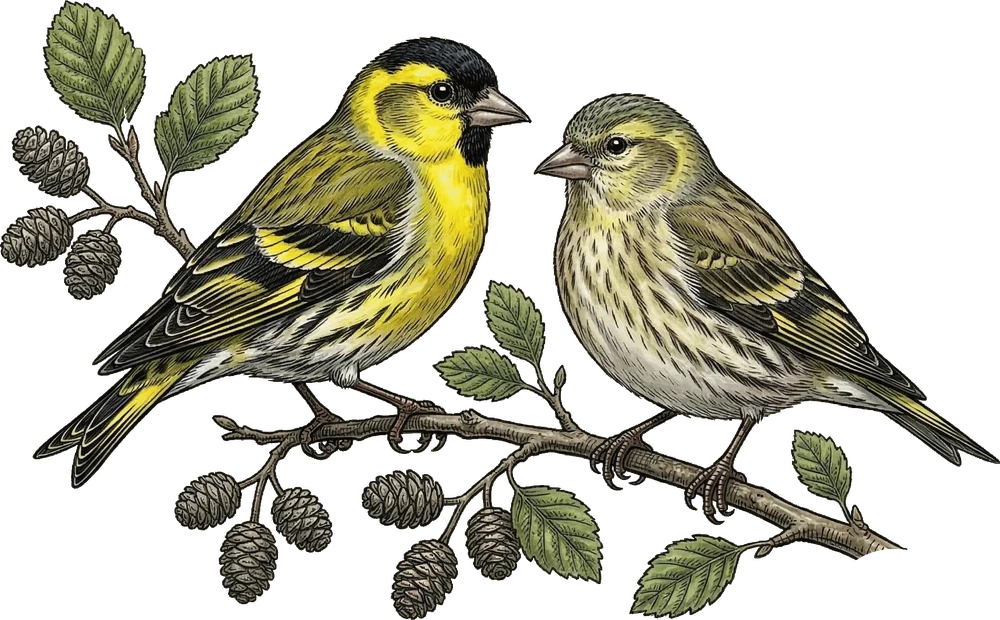
♂ Male · ♀ Female
Stats
Wingspan20–23 cm
Weight10–18 g
Length11–12 cm
Lifespan wild2–11 yrs
Size
XS
S
M
L
XL
Nesting
Nest typeCup
Clutch size3–5 eggs
Incubation12–14 days
Breeding months
1
2
3
4
5
6
7
8
9
10
11
12
Regional Status (Europe)
LC
Least Concern (Europe)
IUCN Red List
MigrationPartial migratory
Social BehaviourFlocking
Diet: Granivore
🦗Insects
🌻Seeds
Habitat
🌲 Forest coniferous🌳 Forest deciduous🌲🌳 Forest mixed🏡 Garden🏙️ Urban
✦ Fun Fact
Siskins are very fond of peanuts and sunflower seeds. They were among the first birds to adapt to using peanut feeders in gardens.
See Eurasian Siskin in the app.
Full encyclopedia, offline diary, AI identification - always with you.
Download on Google Play
Full encyclopedia, offline diary, AI identification - always with you.