European Serin
Serinus serinus
Genus ·
Typical Serins and Allies
Family ·
Finches, Euphonias, and Allies
Observation tips
Difficulty: EASY
Best time
🕒 Any
Activity
☀️ Diurnal
Best months
1
2
3
4
5
6
7
8
9
10
11
12
Observation habitat
Bird feederCanopy foliageUtility wires
Look for a tiny bird with a bright yellow rump. Listen for the 'sizzling' song delivered from a high, exposed perch.
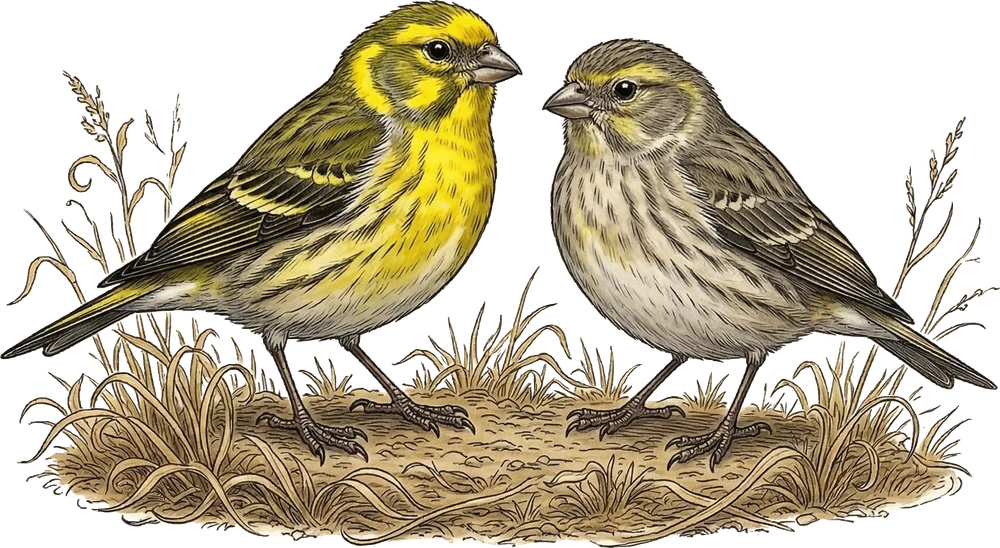
♂ Male · ♀ Female
Stats
Wingspan20–23 cm
Weight10–14 g
Length11–12 cm
Lifespan wild2–9 yrs
Size
XS
S
M
L
XL
Nesting
Nest typeCup
Clutch size3–5 eggs
Incubation12–13 days
Breeding months
1
2
3
4
5
6
7
8
9
10
11
12
Regional Status (Europe)
LC
Least Concern (Europe)
IUCN Red List
MigrationPartial migratory
Social BehaviourFlocking
Diet: Granivore
🦗Insects
🍃Plants
🌻Seeds
Habitat
🚜 Farmland🌲 Forest coniferous🏡 Garden🍎 Orchard🏙️ Urban
✦ Fun Fact
The Serin's song is so fast and high-pitched that it is often compared to the sound of a cicada or a tiny mechanical alarm clock.
See European Serin in the app.
Full encyclopedia, offline diary, AI identification - always with you.
Download on Google Play
Full encyclopedia, offline diary, AI identification - always with you.