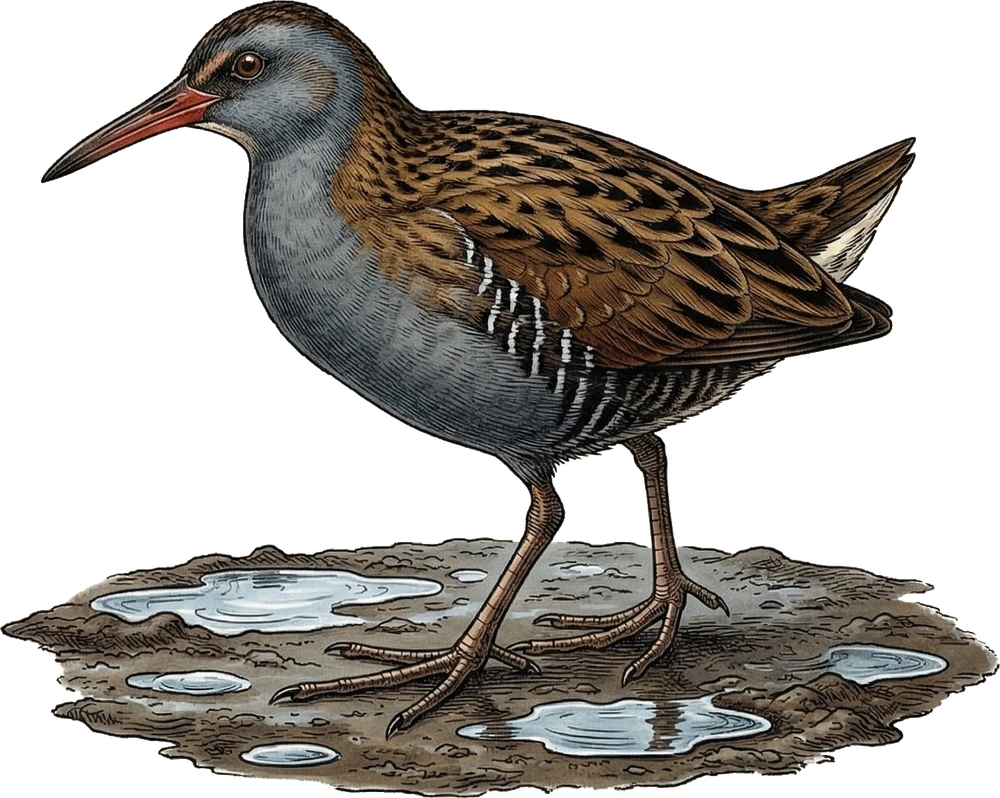
Water Rail
Rallus aquaticus
Genus ·
Typical Rails
Family ·
Rails, Gallinules, and Coots
Observation tips
Difficulty: HARD
Best time
🕒 Any
Activity
🌅 Crepuscular
Best months
1
2
3
4
5
6
7
8
9
10
11
12
Observation habitat
Muddy marginsReed bedsWater edges
The best time to see them is during a very cold winter. Ice forces them out of the reeds onto open patches of mud.
Stats
Wingspan38–45 cm
Weight70–190 g
Length23–28 cm
Lifespan wild5–9 yrs
Size
XS
S
M
L
XL
Nesting
Nest typePlatform
Clutch size6–11 eggs
Incubation19–22 days
Breeding months
1
2
3
4
5
6
7
8
9
10
11
12
Regional Status (Europe)
LC
Least Concern (Europe)
IUCN Red List
MigrationPartial migratory
Social BehaviourSolitary
Diet: Omnivore
🦴Carrion
🐟Fish
🦗Insects
🐚Mollusks
🌻Seeds
🪱Worms
Habitat
🛶 Lake wetlands🌾 Marsh🏞️ River
✦ Fun Fact
The Water Rail's body is so strongly compressed from side to side that it can slip through gaps between reed stems that appear impossibly narrow.
See Water Rail in the app.
Full encyclopedia, offline diary, AI identification - always with you.
Download on Google Play
Full encyclopedia, offline diary, AI identification - always with you.