Great Cormorant
Phalacrocorax carbo
Genus ·
Typical Old World Cormorants
Family ·
Cormorants and Shags
Observation tips
Difficulty: EASY
Best time
🕒 Any
Activity
☀️ Diurnal
Best months
1
2
3
4
5
6
7
8
9
10
11
12
Observation habitat
BuoysDead treesPiersRocks
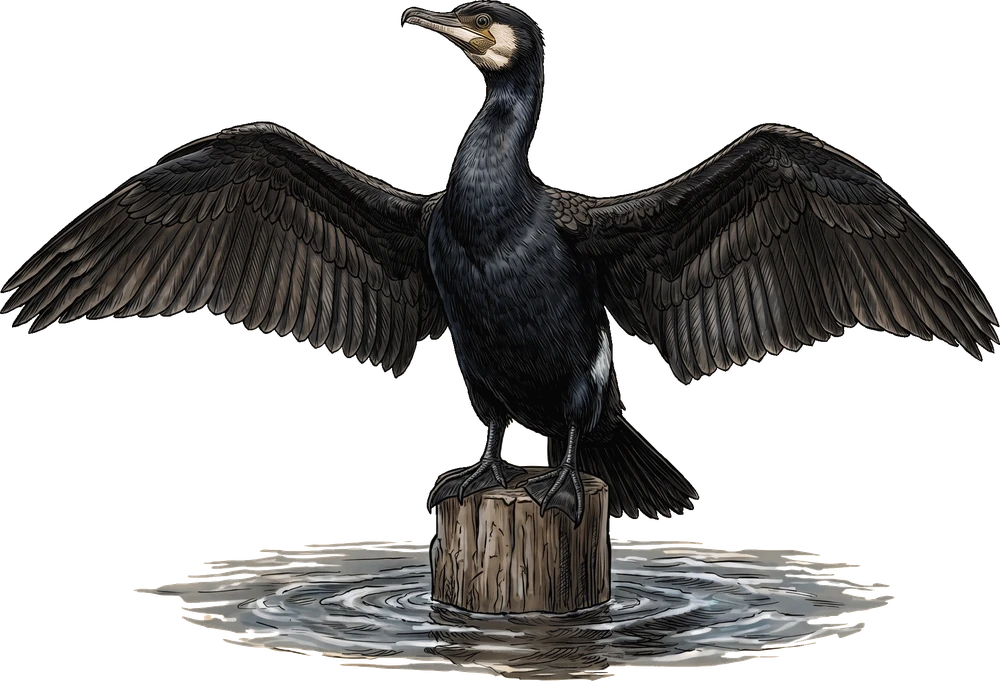
Look for a large black silhouette with a white throat patch. Watch for the classic wing-drying posture.
Stats
Wingspan130–160 cm
Weight1700–3900 g
Length77–95 cm
Lifespan wild10–20 yrs
Size
XS
S
M
L
XL
Nesting
Nest typePlatform
Clutch size3–5 eggs
Incubation28–31 days
Breeding months
1
2
3
4
5
6
7
8
9
10
11
12
Regional Status (Europe)
LC
Least Concern (Europe)
IUCN Red List
MigrationPartial migratory
Social BehaviourColonial
Diet: Piscivore
🦀Crustaceans
🐟Fish
Habitat
🛶 Lake wetlands🌊 Marine🏞️ River
✦ Fun Fact
Cormorants can dive to depths of over 30 metres and hold their breath for more than a minute while pursuing fish underwater.

See Great Cormorant in the app.
Full encyclopedia, offline diary, AI identification - always with you.
Download on Google Play
Full encyclopedia, offline diary, AI identification - always with you.