Eurasian Tree Sparrow
Passer montanus
Genus ·
True Sparrows
Family ·
Old World Sparrows
Observation tips
Difficulty: EASY
Best time
🕒 Any
Activity
☀️ Diurnal
Best months
1
2
3
4
5
6
7
8
9
10
11
12
Observation habitat
Bird feederBushesFarm buildingsFarmland
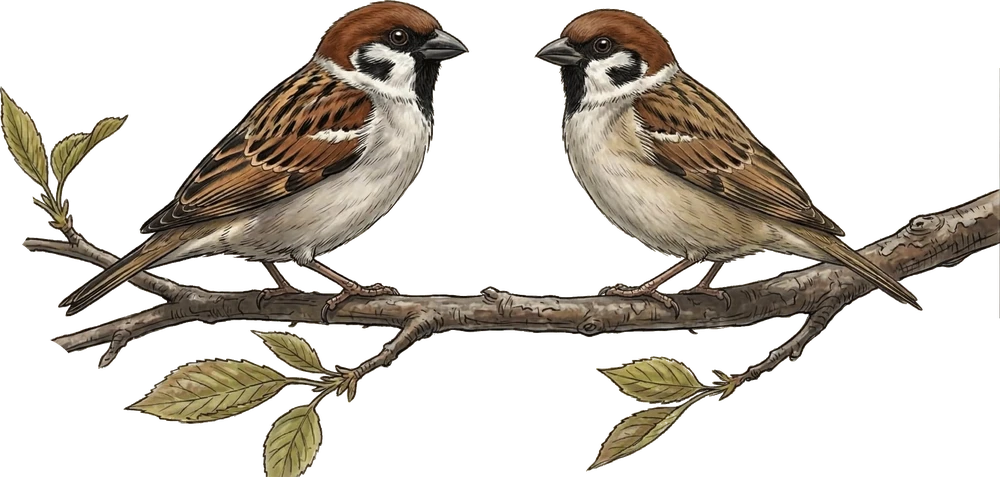
Look for the chestnut cap and the black cheek spot. If a sparrow has these features, it is a Tree Sparrow regardless of the sex.
Stats
Wingspan20–22 cm
Weight18–28 g
Length12–14 cm
Lifespan wild2–10 yrs
Size
XS
S
M
L
XL
Nesting
Nest typeCavity
Clutch size4–6 eggs
Incubation11–14 days
Breeding months
1
2
3
4
5
6
7
8
9
10
11
12
Regional Status (Europe)
LC
Least Concern (Europe)
IUCN Red List
MigrationResident
Social BehaviourFlocking
Diet: Omnivore
🌾Grain
🦗Insects
🌻Seeds
🕷️Spiders
Habitat
🚜 Farmland🌳 Forest deciduous🏡 Garden🍎 Orchard🏙️ Urban
✦ Fun Fact
Unlike the House Sparrow, male and female Tree Sparrows look exactly alike. They are one of the few European perching birds where the sexes share identical plumage.

See Eurasian Tree Sparrow in the app.
Full encyclopedia, offline diary, AI identification - always with you.
Download on Google Play
Full encyclopedia, offline diary, AI identification - always with you.