House Sparrow
Passer domesticus
Genus ·
True Sparrows
Family ·
Old World Sparrows
Observation tips
Difficulty: EASY
Best time
🕒 Any
Activity
☀️ Diurnal
Best months
1
2
3
4
5
6
7
8
9
10
11
12
Observation habitat
FarmlandHedgesUrban
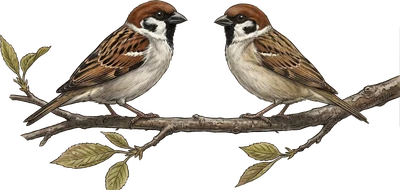
Look for them near houses and outdoor cafes. If the bird has a grey cap and a black bib, it is a male House Sparrow.

♂ Male · ♀ Female
Stats
Wingspan21–25 cm
Weight24–40 g
Length14–18 cm
Lifespan wild3–12 yrs
Size
XS
S
M
L
XL
Nesting
Nest typeCavity
Clutch size3–7 eggs
Incubation11–14 days
Breeding months
1
2
3
4
5
6
7
8
9
10
11
12
Regional Status (Europe)
LC
Least Concern (Europe)
IUCN Red List
MigrationResident
Social BehaviourFlocking
Diet: Omnivore
🌾Grain
🍕Human food
🦗Insects
🍃Plants
🌻Seeds
Habitat
🚜 Farmland🏡 Garden🏙️ Urban
✦ Fun Fact
Unlike many migratory birds, House Sparrows rarely travel far. Many remain within just a few kilometres of their birthplace throughout their lives.
See House Sparrow in the app.
Full encyclopedia, offline diary, AI identification - always with you.
Download on Google Play
Full encyclopedia, offline diary, AI identification - always with you.