Northern Gannet
Morus bassanus
Genus ·
Gannets
Family ·
Boobies and Gannets
Observation tips
Difficulty: MODERATE
Best time
🕒 Any
Activity
☀️ Diurnal
Best months
1
2
3
4
5
6
7
8
9
10
11
12
Observation habitat
Cliffs edgeOffshore watersOpen water
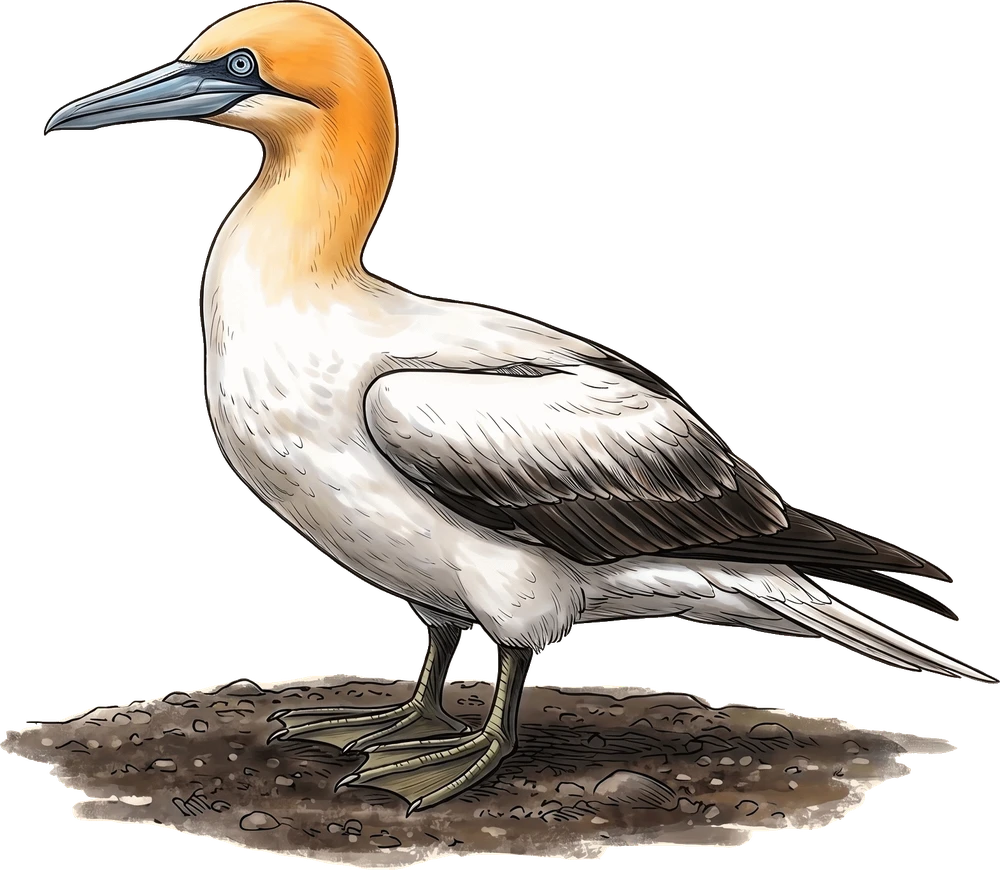
Look for them from coastal headlands. Their dazzling white bodies and long black-tipped wings are unmistakable. Watch for dramatic vertical dives.
Stats
Wingspan165–185 cm
Weight2400–3600 g
Length87–100 cm
Lifespan wild16–30 yrs
Size
XS
S
M
L
XL
Nesting
Nest typePlatform
Clutch size1 eggs
Incubation42–46 days
Breeding months
1
2
3
4
5
6
7
8
9
10
11
12
Regional Status (Europe)
LC
Least Concern (Europe)
IUCN Red List
MigrationMigratory
Social BehaviourColonial
Diet: Piscivore
🐟Fish
Habitat
🌊 Marine⛰️ Mountains
✦ Fun Fact
Northern Gannets have no obvious external nostrils. Instead, they breathe through openings inside the beak that help keep water out during high-speed dives.
See Northern Gannet in the app.
Full encyclopedia, offline diary, AI identification - always with you.
Download on Google Play
Full encyclopedia, offline diary, AI identification - always with you.