Smew
Mergellus albellus
Genus ·
Smew
Family ·
Ducks, Geese, and Swans
Observation tips
Difficulty: MODERATE
Best time
🕒 Any
Activity
☀️ Diurnal
Best months
1
2
3
4
5
6
7
8
9
10
11
12
Observation habitat
Coastal baysIce free riversOpen water
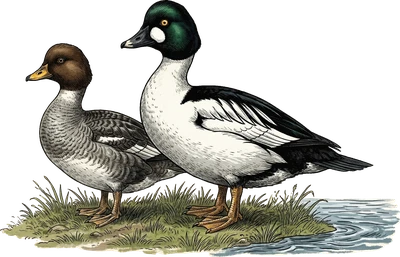
In winter, look for Smews on calm lakes and sheltered bays in small groups mixed with other diving ducks. Males are bright white, while females and juveniles are darker with chestnut heads.

♂ Male · ♀ Female
Stats
Wingspan55–70 cm
Weight500–950 g
Length38–44 cm
Lifespan wild5–12 yrs
Size
XS
S
M
L
XL
Nesting
Nest typeCavity
Clutch size6–10 eggs
Incubation26–28 days
Breeding months
1
2
3
4
5
6
7
8
9
10
11
12
Regional Status (Europe)
LC
Least Concern (Europe)
IUCN Red List
MigrationMigratory
Social BehaviourFlocking
Diet: Piscivore
🦀Crustaceans
🐟Fish
🦗Insects
Habitat
🌲 Forest coniferous🛶 Lake wetlands🌊 Marine🏞️ River
✦ Fun Fact
In winter flocks, males and females look so different that they were once thought to be separate species.

See Smew in the app.
Full encyclopedia, offline diary, AI identification - always with you.
Download on Google Play
Full encyclopedia, offline diary, AI identification - always with you.