Eurasian Wigeon
Mareca penelope
Genus ·
Wigeons and Allies
Family ·
Ducks, Geese, and Swans
Observation tips
Difficulty: EASY
Best time
🕒 Any
Activity
☀️ Diurnal
Best months
1
2
3
4
5
6
7
8
9
10
11
12
Observation habitat
Coastal meadowsCoastal shallowsMarine
Listen for the whistling call. In flight, look for the large white patches on the upper wings of the males.
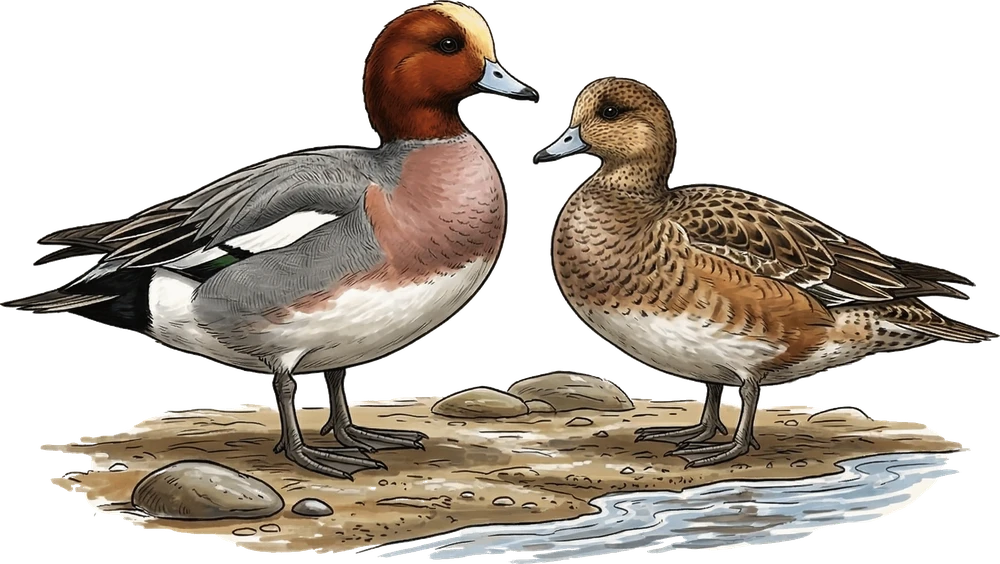
♂ Male · ♀ Female
Stats
Wingspan75–86 cm
Weight500–1050 g
Length42–50 cm
Lifespan wild5–15 yrs
Size
XS
S
M
L
XL
Nesting
Nest typeScrape
Clutch size7–10 eggs
Incubation22–25 days
Breeding months
1
2
3
4
5
6
7
8
9
10
11
12
Regional Status (Europe)
LC
Least Concern (Europe)
IUCN Red List
MigrationMigratory
Social BehaviourFlocking
Diet: Herbivore
🌾Grain
🌱Grass
🍃Plants
Habitat
🛶 Lake wetlands🌾 Marsh🏞️ River
✦ Fun Fact
Wigeons are surprisingly crafty feeders. They often wait for Coots or Mute Swans to bring up aquatic plants from depths beyond their reach, then quickly steal the food for themselves.

See Eurasian Wigeon in the app.
Full encyclopedia, offline diary, AI identification - always with you.
Download on Google Play
Full encyclopedia, offline diary, AI identification - always with you.