Yellow-legged Gull
Larus michahellis
Genus ·
Large White-headed Gulls
Family ·
Gulls, Terns, and Skimmers
Observation tips
Difficulty: MODERATE
Best time
🕒 Any
Activity
☀️ Diurnal
Best months
1
2
3
4
5
6
7
8
9
10
11
12
Observation habitat
PiersRoofsUrban
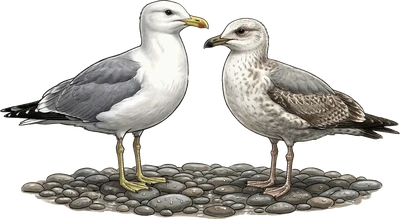
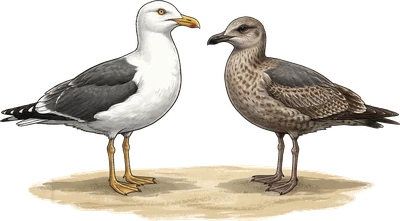
Look for bright yellow legs and the red ring around the eye. Their bill often looks slightly bulbous at the tip.

Stats
Wingspan120–155 cm
Weight750–1300 g
Length52–68 cm
Lifespan wild10–25 yrs
Size
XS
S
M
L
XL
Nesting
Nest typeScrape
Clutch size2–3 eggs
Incubation27–30 days
Breeding months
1
2
3
4
5
6
7
8
9
10
11
12
Regional Status (Europe)
LC
Least Concern (Europe)
IUCN Red List
MigrationResident
Social BehaviourColonial
Diet: Omnivore
🦴Carrion
🦀Crustaceans
🥚Eggs
🐟Fish
🍕Human food
🐭Mammals
Habitat
🛶 Lake wetlands🌊 Marine🏞️ River🏙️ Urban
✦ Fun Fact
These gulls take four years to reach adult plumage. This slow transition acts as a 'social uniform,' signaling their age and status to help them avoid conflict with dominant adults.

See Yellow-legged Gull in the app.
Full encyclopedia, offline diary, AI identification - always with you.
Download on Google Play
Full encyclopedia, offline diary, AI identification - always with you.