Great Grey Shrike
Lanius excubitor
Genus ·
Typical Shrikes
Family ·
Shrikes
Observation tips
Difficulty: MODERATE
Best time
🕒 Any
Activity
☀️ Diurnal
Best months
1
2
3
4
5
6
7
8
9
10
11
12
Observation habitat
Canopy foliageFarmlandFences
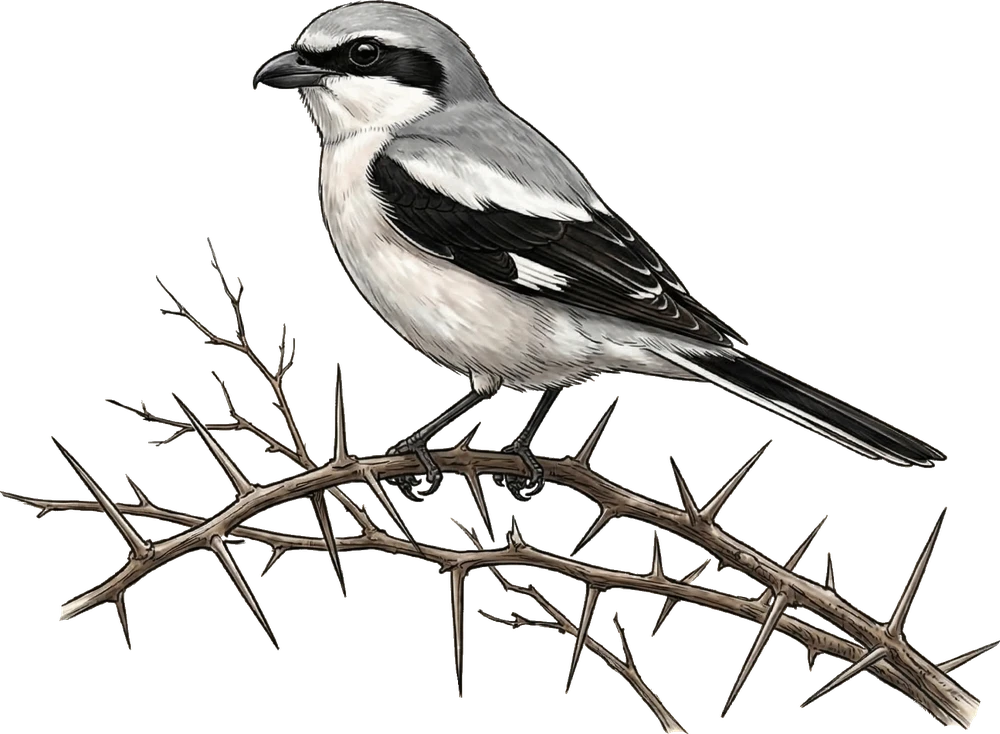
Look for a flash of grey and white on a high lookout point in open country. The black mask and hooked bill are visible with binoculars.
Stats
Wingspan30–36 cm
Weight50–80 g
Length22–26 cm
Lifespan wild3–12 yrs
Size
XS
S
M
L
XL
Nesting
Nest typeCup
Clutch size3–9 eggs
Incubation15–18 days
Breeding months
1
2
3
4
5
6
7
8
9
10
11
12
Regional Status (Europe)
LC
Least Concern (Europe)
IUCN Red List
MigrationPartial migratory
Social BehaviourSolitary
Diet: Carnivore
🐸Amphibians
🦅Birds
🦗Insects
🐭Mammals
🦎Reptiles
Habitat
🚜 Farmland🌳 Forest deciduous🌿 Grassland🍎 Orchard🏜️ Scrub wasteland
✦ Fun Fact
Its scientific name 'excubitor' means 'sentinel' or 'watchman'. This refers to its habit of sitting perfectly still on high perches to scan the landscape.
See Great Grey Shrike in the app.
Full encyclopedia, offline diary, AI identification - always with you.
Download on Google Play
Full encyclopedia, offline diary, AI identification - always with you.