Eurasian Jay
Garrulus glandarius
Genus ·
Old World Jays
Family ·
Crows, Jays, and Magpies
Observation tips
Difficulty: EASY
Best time
🕒 Any
Activity
☀️ Diurnal
Best months
1
2
3
4
5
6
7
8
9
10
11
12
Observation habitat
Forest deciduousOak woodlandUrban
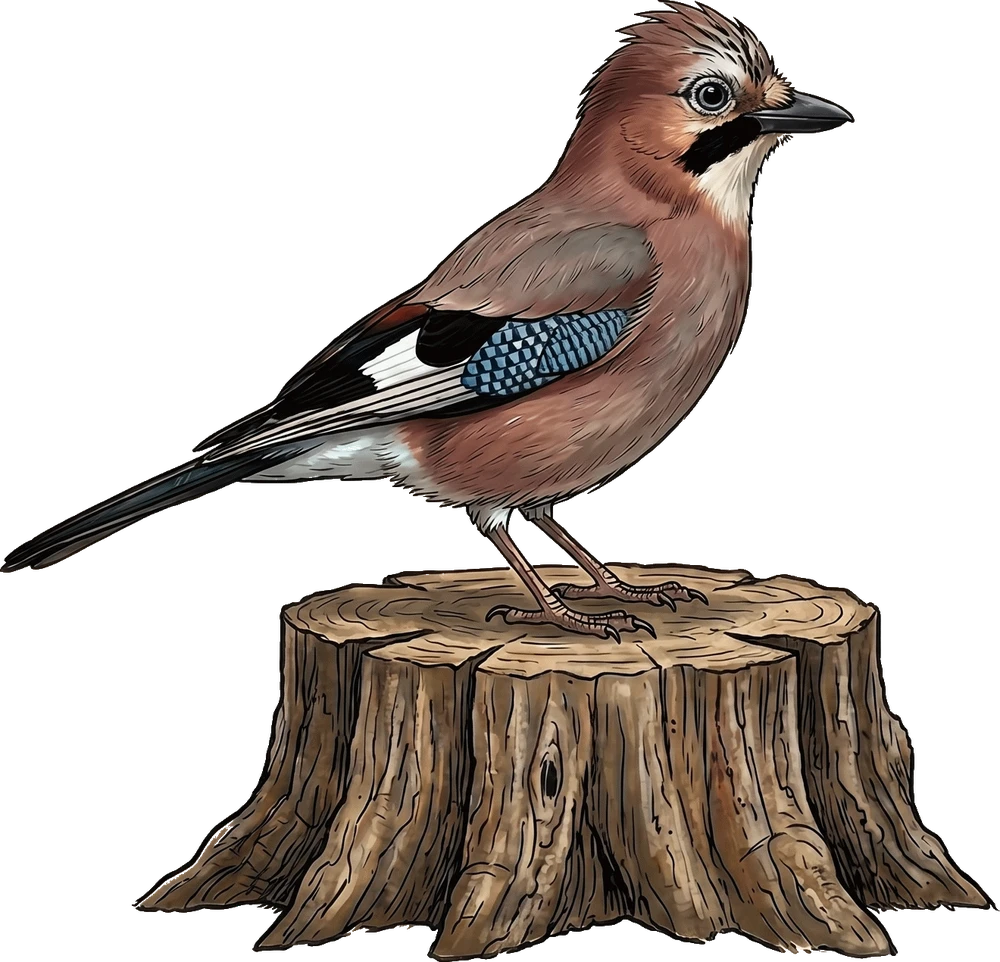
Look for the flash of the white rump and the blue wing patch. Listen for their screaming 'skraak-skraak' call between trees.
Stats
Wingspan52–58 cm
Weight140–190 g
Length33–35 cm
Lifespan wild5–17 yrs
Size
XS
S
M
L
XL
Nesting
Nest typeCup
Clutch size3–6 eggs
Incubation16–19 days
Breeding months
1
2
3
4
5
6
7
8
9
10
11
12
Regional Status (Europe)
LC
Least Concern (Europe)
IUCN Red List
MigrationResident
Social BehaviourMonogamous pairs
Diet: Omnivore
🫐Berries
🦅Birds
🥚Eggs
🦗Insects
🐭Mammals
🥜Nuts
Habitat
🌲 Forest coniferous🌳 Forest deciduous🌲🌳 Forest mixed🏡 Garden🏙️ Urban
✦ Fun Fact
Jays sometimes sit on anthills and allow ants to crawl over their feathers. The ants secrete formic acid to help the bird remove parasites.

See Eurasian Jay in the app.
Full encyclopedia, offline diary, AI identification - always with you.
Download on Google Play
Full encyclopedia, offline diary, AI identification - always with you.