Common Snipe
Gallinago gallinago
Genus ·
Typical Snipes
Family ·
Sandpipers and Allies
Observation tips
Difficulty: HARD
Best time
🌆 Evening
Activity
🌅 Crepuscular
Best months
1
2
3
4
5
6
7
8
9
10
11
12
Observation habitat
GrasslandMarshMuddy margins
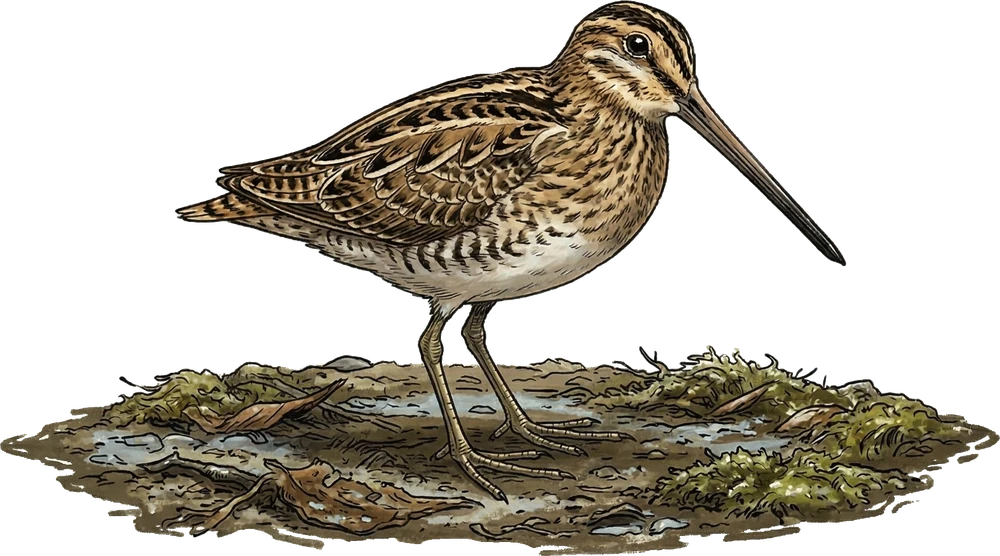
Look for them at the muddy edges of ponds. Scan for the long bill and the straw-colored stripes on the back while the bird is motionless.
Stats
Wingspan42–49 cm
Weight75–180 g
Length24–28 cm
Lifespan wild5–15 yrs
Size
XS
S
M
L
XL
Nesting
Nest typeScrape
Clutch size4 eggs
Incubation18–21 days
Breeding months
1
2
3
4
5
6
7
8
9
10
11
12
Regional Status (Europe)
LC
Least Concern (Europe)
IUCN Red List
MigrationMigratory
Social BehaviourSolitary
Diet: Omnivore
🦗Insects
🐛Larvae
🐚Mollusks
🌻Seeds
🪱Worms
Habitat
🌫️ Bog🌿 Grassland🛶 Lake wetlands🌾 Marsh🏞️ River
✦ Fun Fact
Snipes have an extraordinary field of vision. Their eyes are positioned further back on their heads than in most birds, allowing them to see behind themselves while their long bill is buried deep in the mud probing for food.


See Common Snipe in the app.
Full encyclopedia, offline diary, AI identification - always with you.
Download on Google Play
Full encyclopedia, offline diary, AI identification - always with you.