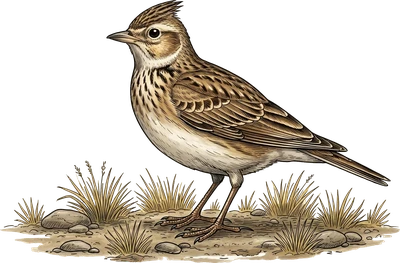
Crested Lark
Galerida cristata
Genus ·
Crested Larks
Family ·
Larks
Observation tips
Difficulty: EASY
Best time
🕒 Any
Activity
☀️ Diurnal
Best months
1
2
3
4
5
6
7
8
9
10
11
12
Observation habitat
Scrub wastelandUrban
Look for a lark with a prominent 'spike' on its head. They are common in Mediterranean countries and industrial zones.

Stats
Wingspan29–38 cm
Weight37–55 g
Length17–19 cm
Lifespan wild3–12 yrs
Size
XS
S
M
L
XL
Nesting
Nest typeScrape
Clutch size3–5 eggs
Incubation11–13 days
Breeding months
1
2
3
4
5
6
7
8
9
10
11
12
Regional Status (Europe)
LC
Least Concern (Europe)
IUCN Red List
MigrationResident
Social BehaviourMonogamous pairs
Diet: Omnivore
🦗Insects
🐛Larvae
🌻Seeds
Habitat
🚜 Farmland🏜️ Scrub wasteland🏙️ Urban
✦ Fun Fact
Crested Larks often continue singing even during the hottest parts of the day, unlike many other small birds.
See Crested Lark in the app.
Full encyclopedia, offline diary, AI identification - always with you.
Download on Google Play
Full encyclopedia, offline diary, AI identification - always with you.