Common Kestrel
Falco tinnunculus
Genus ·
Typical Falcons
Family ·
Falcons and Caracaras
Observation tips
Difficulty: EASY
Best time
🕒 Any
Activity
☀️ Diurnal
Best months
1
2
3
4
5
6
7
8
9
10
11
12
Observation habitat
FarmlandUrban
Very easy to identify by its hovering behavior. Look for them along roadsides. The male's grey head is a clear marker if perched.
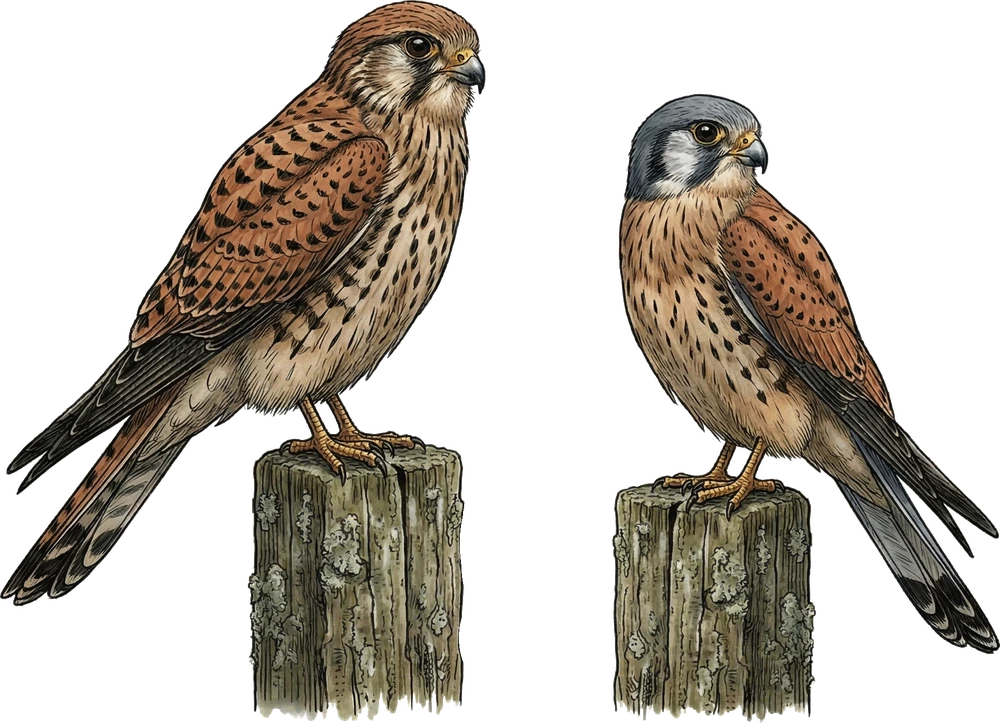
♂ Male · ♀ Female
Stats
Wingspan70–82 cm
Weight150–320 g
Length32–39 cm
Lifespan wild5–16 yrs
Size
XS
S
M
L
XL
Nesting
Nest typePlatform
Clutch size3–6 eggs
Incubation27–31 days
Breeding months
1
2
3
4
5
6
7
8
9
10
11
12
Regional Status (Europe)
LC
Least Concern (Europe)
IUCN Red List
MigrationPartial migratory
Social BehaviourMonogamous pairs
Diet: Carnivore
🦅Birds
🦗Insects
🐭Mammals
🦎Reptiles
Habitat
🚜 Farmland🌿 Grassland⛰️ Mountains🏙️ Urban
✦ Fun Fact
Kestrels can see ultraviolet light. This allows them to see urine trails left by voles, effectively tracking their prey like a glowing map.


See Common Kestrel in the app.
Full encyclopedia, offline diary, AI identification - always with you.
Download on Google Play
Full encyclopedia, offline diary, AI identification - always with you.