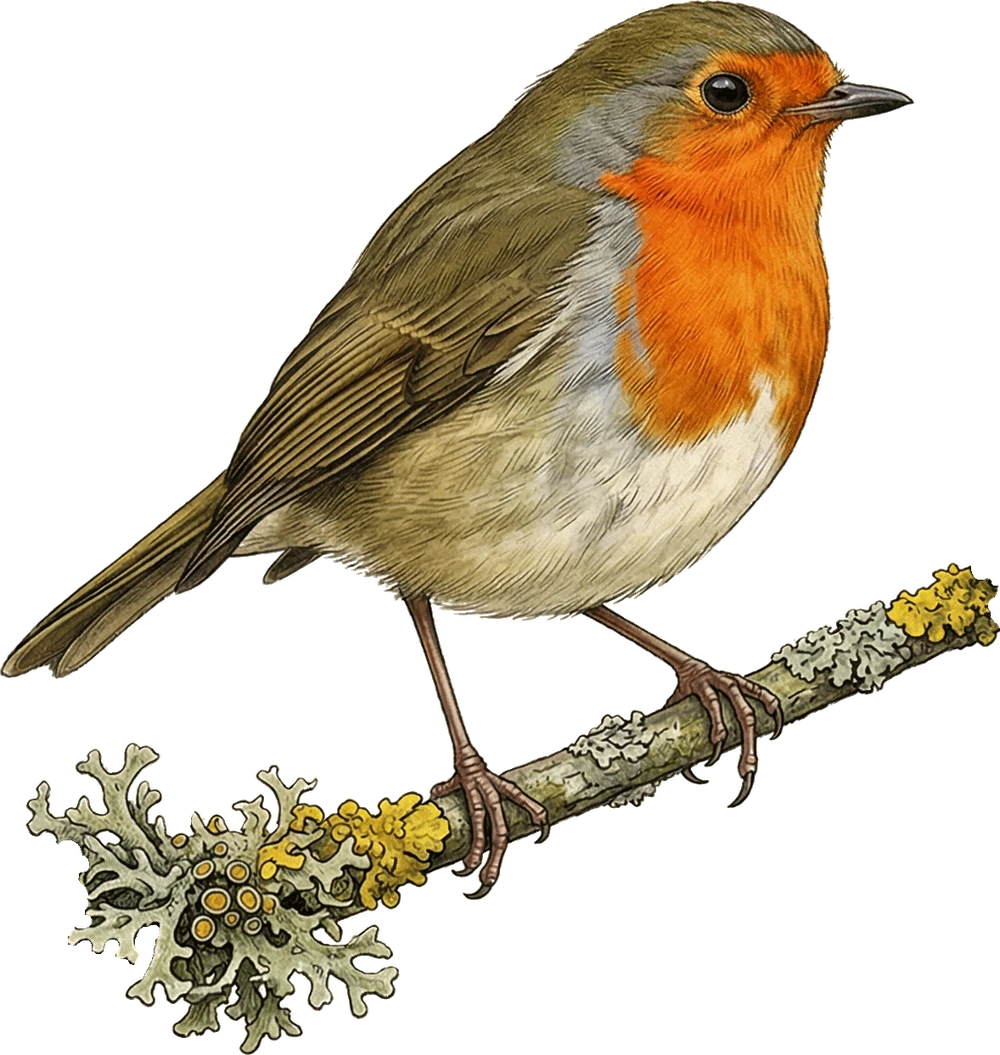
European Robin
Erithacus rubecula
Genus ·
European Robins
Family ·
Old World Flycatchers, Robins, and Chats
Observation tips
Difficulty: EASY
Best time
🕒 Any
Activity
☀️ Diurnal
Best months
1
2
3
4
5
6
7
8
9
10
11
12
Observation habitat
Forest deciduousGardenUrban
Very easy to find in gardens and parks. Look for the orange face and breast. They often perch on low branches or garden tools.
Stats
Wingspan20–22 cm
Weight14–23 g
Length12–14 cm
Lifespan wild2–10 yrs
Size
XS
S
M
L
XL
Nesting
Nest typeCup
Clutch size4–7 eggs
Incubation12–15 days
Breeding months
1
2
3
4
5
6
7
8
9
10
11
12
Regional Status (Europe)
LC
Least Concern (Europe)
IUCN Red List
MigrationPartial migratory
Social BehaviourTerritorial
Diet: Omnivore
🦗Insects
🪱Worms
🫐Berries
🕷️Spiders
🌻Seeds
🐛Larvae
Habitat
🚜 Farmland🌳 Forest deciduous🌲🌳 Forest mixed🏡 Garden🏙️ Urban
✦ Fun Fact
Robins can 'see' the Earth's magnetic field. They have a specialized protein in their eyes that helps them navigate during migration.
See European Robin in the app.
Full encyclopedia, offline diary, AI identification - always with you.
Download on Google Play
Full encyclopedia, offline diary, AI identification - always with you.