Corn Bunting
Emberiza calandra
Genus ·
Old World Buntings
Family ·
Old World Buntings
Observation tips
Difficulty: EASY
Best time
🕒 Any
Activity
☀️ Diurnal
Best months
1
2
3
4
5
6
7
8
9
10
11
12
Observation habitat
FarmlandFencesGrassland
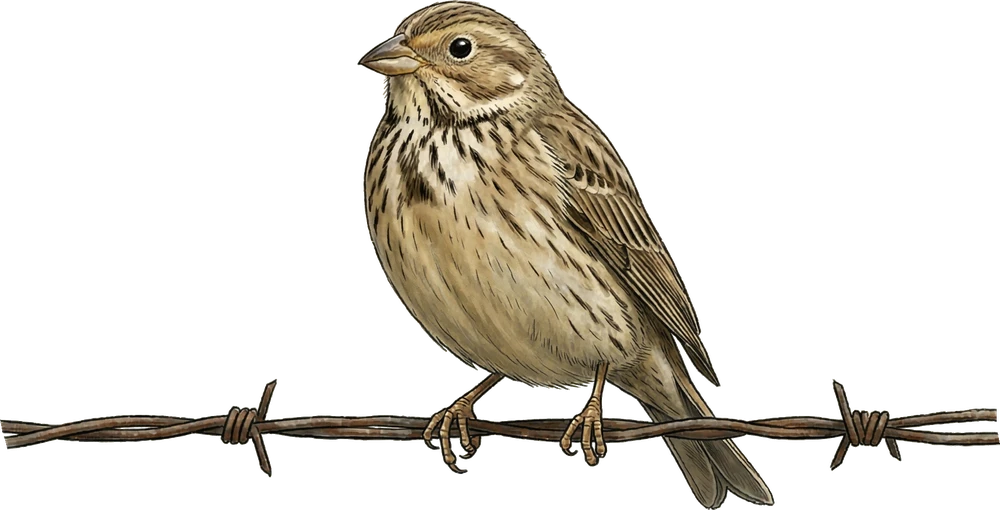
Look for a bird perched on a wire in open fields. Listen for the 'jangling keys' song. When it flies, watch for the dangling legs.
Stats
Wingspan26–32 cm
Weight35–65 g
Length16–19 cm
Lifespan wild3–9 yrs
Size
XS
S
M
L
XL
Nesting
Nest typeScrape
Clutch size4–6 eggs
Incubation12–14 days
Breeding months
1
2
3
4
5
6
7
8
9
10
11
12
Regional Status (Europe)
LC
Least Concern (Europe)
IUCN Red List
MigrationPartial migratory
Social BehaviourFlocking
Diet: Omnivore
🌾Grain
🦗Insects
🌻Seeds
Habitat
🚜 Farmland🌿 Grassland
✦ Fun Fact
The Corn Bunting is an 'indicator species' for farmland health. Where they thrive, insect and seed populations are usually in good balance.
See Corn Bunting in the app.
Full encyclopedia, offline diary, AI identification - always with you.
Download on Google Play
Full encyclopedia, offline diary, AI identification - always with you.