Common Wood Pigeon
Columba palumbus
Genus ·
Typical Old World Pigeons
Family ·
Pigeons and Doves
Observation tips
Difficulty: EASY
Best time
🕒 Any
Activity
☀️ Diurnal
Best months
1
2
3
4
5
6
7
8
9
10
11
12
Observation habitat
FarmlandForest deciduousUrban
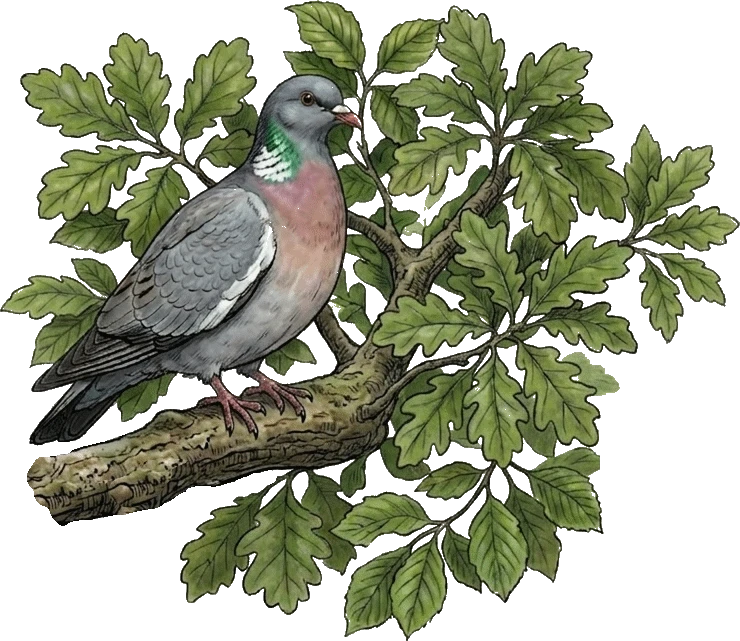
Very easy to find. Look for the white 'shoulder' stripes in flight and the white neck patch on adults. Juveniles lack the neck patch.
Stats
Wingspan75–82 cm
Weight350–650 g
Length40–45 cm
Lifespan wild3–16 yrs
Size
XS
S
M
L
XL
Nesting
Nest typePlatform
Clutch size2 eggs
Incubation17–19 days
Breeding months
1
2
3
4
5
6
7
8
9
10
11
12
Regional Status (Europe)
LC
Least Concern (Europe)
IUCN Red List
MigrationPartial migratory
Social BehaviourFlocking
Diet: Granivore
🫐Berries
🌾Grain
🥜Nuts
🍃Plants
🌻Seeds
Habitat
🚜 Farmland🌳 Forest deciduous🏡 Garden🏙️ Urban
✦ Fun Fact
Despite their heavy look, Wood Pigeons are strong fliers. During migration, flocks of tens of thousands can be seen crossing the Pyrenees or the Baltic Sea.


See Common Wood Pigeon in the app.
Full encyclopedia, offline diary, AI identification - always with you.
Download on Google Play
Full encyclopedia, offline diary, AI identification - always with you.