Eurasian Jackdaw
Coloeus monedula
Genus ·
Jackdaws
Family ·
Crows, Jays, and Magpies
Observation tips
Difficulty: EASY
Best time
🕒 Any
Activity
☀️ Diurnal
Best months
1
2
3
4
5
6
7
8
9
10
11
12
Observation habitat
FarmlandUrban
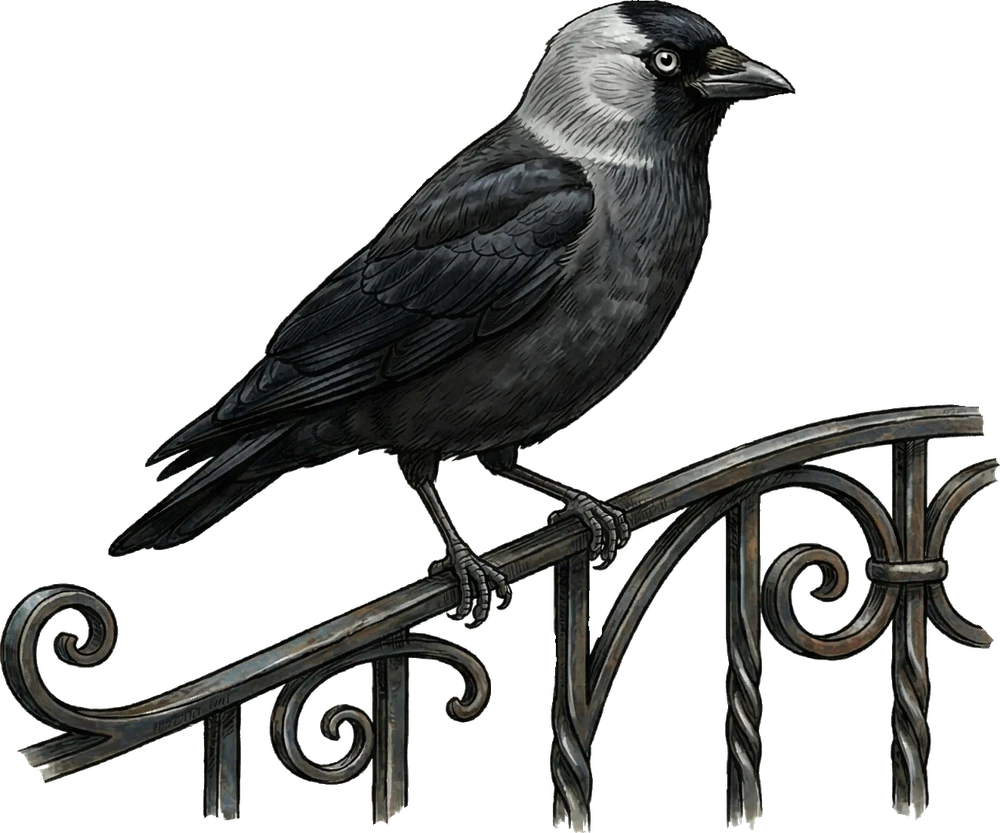
Easy to find in parks and around old buildings. Look for the grey 'hood' on the back of the head and the striking pale eyes.
Stats
Wingspan64–74 cm
Weight220–260 g
Length34–39 cm
Lifespan wild5–18 yrs
Size
XS
S
M
L
XL
Nesting
Nest typeCavity
Clutch size4–6 eggs
Incubation17–19 days
Breeding months
1
2
3
4
5
6
7
8
9
10
11
12
Regional Status (Europe)
LC
Least Concern (Europe)
IUCN Red List
MigrationResident
Social BehaviourFlocking
Diet: Omnivore
🫐Berries
🦴Carrion
🥚Eggs
🌾Grain
🍕Human food
🦗Insects
🌻Seeds
Habitat
🚜 Farmland🌲🌳 Forest mixed⛰️ Mountains🏙️ Urban
✦ Fun Fact
Eurasian Jackdaws are highly observant birds capable of learning to associate human cues such as pointing or gaze direction with food rewards, especially through repeated exposure and experience.

See Eurasian Jackdaw in the app.
Full encyclopedia, offline diary, AI identification - always with you.
Download on Google Play
Full encyclopedia, offline diary, AI identification - always with you.