Red Knot
Calidris canutus
Genus ·
Calidris Sandpipers
Family ·
Sandpipers and Allies
Observation tips
Difficulty: MODERATE
Best time
🕒 Any
Activity
☀️ Diurnal
Best months
1
2
3
4
5
6
7
8
9
10
11
12
Observation habitat
MarineRiver
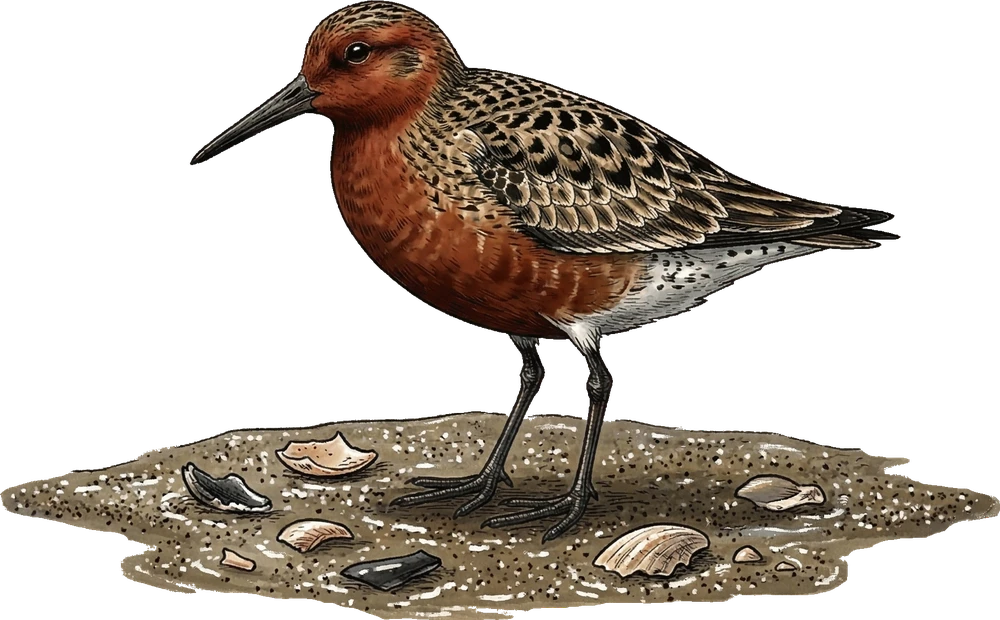
Best seen in winter on coastal mudflats and wetlands. Look for a stocky, pale grey wader larger than a Dunlin. In late spring, look for birds turning red before they head north.
Stats
Wingspan47–54 cm
Weight100–220 g
Length23–26 cm
Lifespan wild10–15 yrs
Size
XS
S
M
L
XL
Nesting
Nest typeScrape
Clutch size3–4 eggs
Incubation21–23 days
Breeding months
1
2
3
4
5
6
7
8
9
10
11
12
Regional Status (Europe)
NT
Near Threatened (Europe)
IUCN Red List
MigrationMigratory
Social BehaviourFlocking
Diet: Carnivore
🐚Mollusks
🦀Crustaceans
🦗Insects
🪱Worms
Habitat
🌊 Marine🏞️ River❄️ Tundra
✦ Fun Fact
Red Knots don’t rely on sight alone when foraging — their sensitive bill tips help them feel for hidden prey beneath the sand as they probe along tidal flats.


See Red Knot in the app.
Full encyclopedia, offline diary, AI identification - always with you.
Download on Google Play
Full encyclopedia, offline diary, AI identification - always with you.