Sanderling
Calidris alba
Genus ·
Calidris Sandpipers
Family ·
Sandpipers and Allies
Observation tips
Difficulty: EASY
Best time
🕒 Any
Activity
☀️ Diurnal
Best months
1
2
3
4
5
6
7
8
9
10
11
12
Observation habitat
Marine
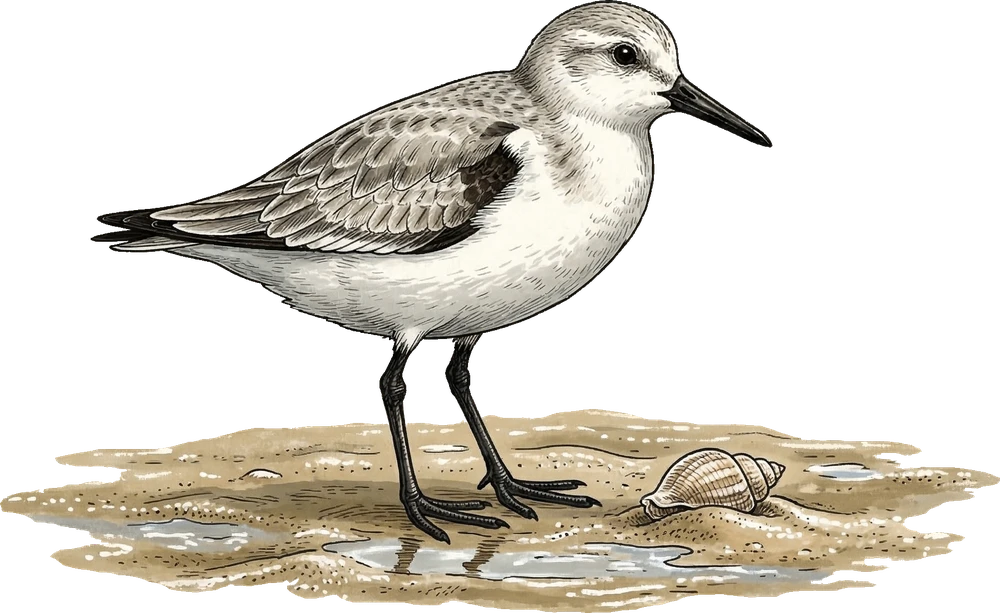
Look for them on wide, sandy ocean beaches. Watch for the 'clockwork toy' running motion and their snowy-white winter appearance.
Stats
Wingspan35–45 cm
Weight40–100 g
Length18–21 cm
Lifespan wild5–13 yrs
Size
XS
S
M
L
XL
Nesting
Nest typeScrape
Clutch size3–4 eggs
Incubation24–32 days
Breeding months
1
2
3
4
5
6
7
8
9
10
11
12
Regional Status (Europe)
LC
Least Concern (Europe)
IUCN Red List
MigrationMigratory
Social BehaviourFlocking
Diet: Carnivore
🦀Crustaceans
🐟Fish
🦗Insects
🐚Mollusks
🪱Worms
Habitat
🌊 Marine🏞️ River❄️ Tundra
✦ Fun Fact
Sanderlings are impressive migrants. Some individuals travel over 10,000 kilometres from the Arctic to the southern tips of Africa or South America.


See Sanderling in the app.
Full encyclopedia, offline diary, AI identification - always with you.
Download on Google Play
Full encyclopedia, offline diary, AI identification - always with you.